

Types of Recyclable Mailing Materials for Marketers

Recyclable mailing materials are packaging formats designed to re-enter a material recovery stream after use, whether through curbside pickup, store drop-off, or specialized programs. For marketing and sustainability professionals, the types of recyclable mailing materials you choose directly affect brand perception, compliance risk, and campaign ROI. Paper mailers lead in curbside recyclability, while plastic formats require dedicated recycling infrastructure. Certifications like How2Recycle and FSC labeling separate genuinely recyclable options from greenwashing risks. Getting this distinction right is the foundation of any credible sustainable direct mail program.
1. What are the types of recyclable mailing materials?
Recyclable mailing materials fall into three broad categories: paper-based, plastic-based, and emerging fiber-engineered formats. Each category carries different recyclability credentials, protection levels, and marketing implications. Choosing the wrong category does not just hurt the environment. It can expose your brand to greenwashing claims and erode consumer trust.
Paper-based mailers are the most straightforward choice for curbside recyclability. Plastic mailers require store drop-off programs and carry contamination risks. Fiber-engineered mailers represent the newest category, combining the protection of plastic with the recyclability of paper.
2. Paper-based recyclable mailing materials
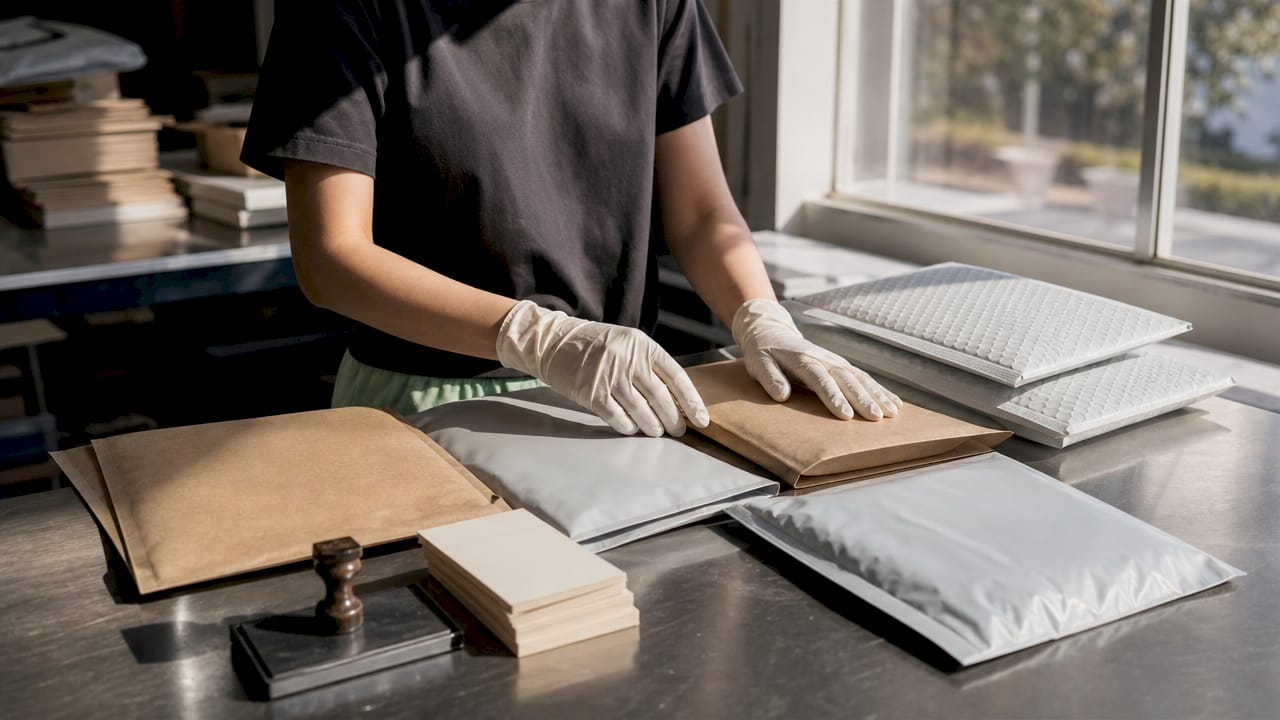
Paper mailers are 100% curbside recyclable across all major formats, making them the default choice for brands with serious sustainability commitments. They biodegrade in 2–6 months and carry zero microplastics risk, compared to poly mailers that take 500–1,000 years to break down. That gap in environmental impact is not marginal. It is the difference between a credible sustainability claim and a liability.
The main paper mailer formats break down as follows:
- Flat kraft mailers (80–150 GSM): Best for lightweight, flat items like catalogs, cards, and folded apparel. They offer basic protection and print beautifully for brand messaging.
- Honeycomb padded mailers: Provide 65–75% impact absorption using a paper honeycomb core instead of plastic bubble wrap. Ideal for cosmetics, small electronics, and fragile D2C products.
- Rigid stay-flat mailers (up to 550 GSM): Prevent bending for photos, art prints, and documents. The high GSM rating delivers crush resistance without any plastic layer.
- Expandable gusseted mailers: Open wide to accommodate bulkier items while maintaining a snug fit. A snug fit reduces the need for filler material, which improves both recyclability and shipping density.
- Custom printed mailers: Available across all paper formats. Printed branding on a kraft surface signals environmental responsibility at the moment of unboxing.
Pro Tip: Request FSC-certified paper stock when sourcing recyclable mailing materials. FSC certification confirms the fiber comes from responsibly managed forests, which strengthens your sustainability claims with auditable credentials.
Paper mailers also biodegrade cleanly, which means recipients who miss the recycling bin do not create a lasting pollution problem. That backstop matters for brands targeting environmentally conscious consumers who read packaging labels carefully.
3. How recyclable are plastic-based mailing materials?
Plastic mailers are not curbside recyclable. LDPE (#4) and HDPE (#2) poly mailers require store drop-off recycling programs, typically at grocery or retail locations that collect plastic film. Most consumers do not take this extra step, which means the real-world recycling rate for plastic mailers is far lower than the theoretical one.
The main plastic mailer types include:
- LDPE (#4) poly mailers: The most common format for e-commerce shipping. Lightweight and water-resistant, but require film drop-off recycling.
- HDPE (#2) poly mailers: Stiffer and more durable. Also require store drop-off and are not accepted in curbside bins.
- PP (#5) poly mailers: Less common, with even more limited recycling infrastructure in most U.S. municipalities.
- Hybrid mailers: Paper-faced exterior with a plastic bubble interior. These look recyclable but recycling centers reject them because the paper and plastic layers cannot be separated. This is one of the most common greenwashing pitfalls in the mailer category.
Pro Tip: If you use plastic mailers, print clear recycling instructions directly on the mailer. Include the recycling code and the phrase “Store Drop-Off Only.” Consumers who want to recycle correctly need that guidance at the point of disposal, not buried in a website FAQ.
Misunderstanding “biodegradable” versus “recyclable” creates real contamination problems. Biodegradable mailers require industrial composting conditions to break down and contaminate plastic recycling streams when mixed in. These two categories require completely separate end-of-life processes, and your packaging must communicate that distinction clearly.
4. Innovative and emerging recyclable mailing materials
The most significant development in sustainable packaging is the rise of engineered fiber mailers that match plastic’s protection without its recycling problems. WaveKraft fiber mailers, for example, deliver 50–80% better cushioning than traditional plastic mailers while containing 50% recycled paper content from FSC-certified mills. That performance gap used to justify choosing plastic. It no longer does.
Three categories define the emerging space:
- Engineered fiber mailers: Monomaterial paper construction with structured cushioning. Curbside recyclable and certified by How2Recycle. Best for brands shipping fragile goods who previously defaulted to bubble mailers.
- Compostable mailers: Made from biopolymers or recycled paper fibers. Compostable in industrial facilities, not home compost bins. Require clear labeling to prevent contamination of recycling streams.
- Reusable mailing bags and boxes: Designed for return logistics. Reusable packaging reduces environmental impact by 59% compared to single-use formats when returned multiple times. Best suited for subscription brands with established return programs.
The operational case for fiber mailers is as strong as the environmental one. Gusseted fiber mailers open wide, maintain shape during packing, increase packing speed, and reduce transportation carbon emissions through better shipment density. The shift toward recyclable mailing materials is driven as much by logistics efficiency as by environmental goals. That dual benefit makes the business case straightforward.
For brands evaluating corporate sustainability print policy, fiber-based mailers represent the clearest path to meeting both procurement standards and consumer expectations without operational trade-offs.
5. Which recyclable mailers fit which product categories?
Matching mailer type to product category is the practical step most sustainability guides skip. The right fit reduces dunnage, protects the product, and makes recycling easier for the end consumer. A snug-fit mailer eliminates loose filler, which means the entire package goes into one recycling stream without sorting.
Here is how the main product categories align with recyclable mailer formats:
- Fashion and apparel: Flat kraft or lightweight gusseted paper mailers. Apparel is flexible and does not need cushioning, so paper mailers work perfectly and print well for brand impact.
- Beauty and cosmetics: Honeycomb padded paper mailers. The cushioning protects glass and fragile packaging without plastic bubble wrap.
- Books and flat media: Rigid stay-flat mailers at 400–550 GSM. These prevent bending and are fully curbside recyclable.
- Electronics and tech accessories: Engineered fiber mailers like WaveKraft. The structured cushioning replaces plastic bubble mailers for items that need real shock protection.
- D2C subscription boxes: Gusseted expandable mailers or reusable formats. Subscription brands benefit most from reusable packaging because the return logistics are already built into the customer relationship.
95% of consumers report that sustainable packaging significantly influences their brand perception. That statistic means recyclable packaging is not just a compliance checkbox. It is a direct driver of repeat purchase and brand loyalty. Brands that use high-impact mailer designs with visible recyclability credentials give consumers a reason to trust them at the moment of delivery.
Marketing professionals should also consider that transparent recycling credentials reduce greenwashing risk. A How2Recycle label on a paper mailer is a verifiable claim. A vague “eco-friendly” badge on a hybrid mailer is not. The difference shows up in consumer reviews and regulatory scrutiny.
Pro Tip: For bespoke print solutions on paper mailers, work with suppliers who can print recycling instructions and certifications directly on the mailer surface. This removes ambiguity for consumers and reinforces your brand’s environmental commitment at the point of unboxing.
Key Takeaways
Paper-based mailing materials are the most reliable choice for curbside recyclability, while plastic mailers require store drop-off programs and hybrid formats are rejected by most recycling centers.
| Point | Details |
|---|---|
| Paper mailers are curbside recyclable | Kraft, honeycomb, and rigid formats are accepted in standard municipal recycling with no extra steps. |
| Plastic mailers need store drop-off | LDPE (#4) and HDPE (#2) poly mailers require film collection points, not curbside bins. |
| Hybrid mailers are not recyclable | Mixed paper-plastic construction causes rejection at recycling centers due to inseparable layers. |
| Fiber mailers match plastic protection | Engineered formats like WaveKraft deliver 50–80% better cushioning than plastic while staying curbside recyclable. |
| Packaging affects brand perception | 95% of consumers say sustainable packaging influences how they view a brand, making material choice a marketing decision. |
Why I always recommend starting with paper, not bioplastics
The most common mistake I see marketing teams make is reaching for compostable or biodegradable mailers as their sustainability answer. It feels like the right move. The word “compostable” sounds cleaner than “recyclable.” But in practice, compostable mailers require industrial composting infrastructure that most consumers cannot access. When those mailers end up in a recycling bin, they contaminate the entire load.
Paper mailers do not have that problem. They go in the blue bin. No consumer education campaign required. That simplicity is a competitive advantage, not a compromise.
The second mistake is choosing hybrid mailers because they look sustainable. A paper exterior with a plastic bubble interior is not recyclable. Recycling centers reject the entire item. Brands that use these formats and label them “eco-friendly” are one investigative article away from a greenwashing story.
My recommendation is always to start with monomaterial paper mailers and move to engineered fiber formats for products that need real cushioning. Bioplastics and compostable options have a role, but only when your brand can commit to consumer education and verified composting infrastructure. Most direct mail programs cannot make that commitment credibly.
The future of this category belongs to fiber-based engineered mailers. They close the performance gap with plastic, carry verifiable recycling credentials, and improve logistics efficiency. That combination is hard to argue against.
— James
Envypak’s recyclable mailing solutions for direct mail campaigns
Envypak’s direct mail envelopes are built for marketing professionals who need both visual impact and genuine sustainability credentials. Envypak’s clear mailers use eco-friendly materials that are compatible with USPS approval standards and automated sealing systems, which means you do not sacrifice operational efficiency for environmental responsibility.
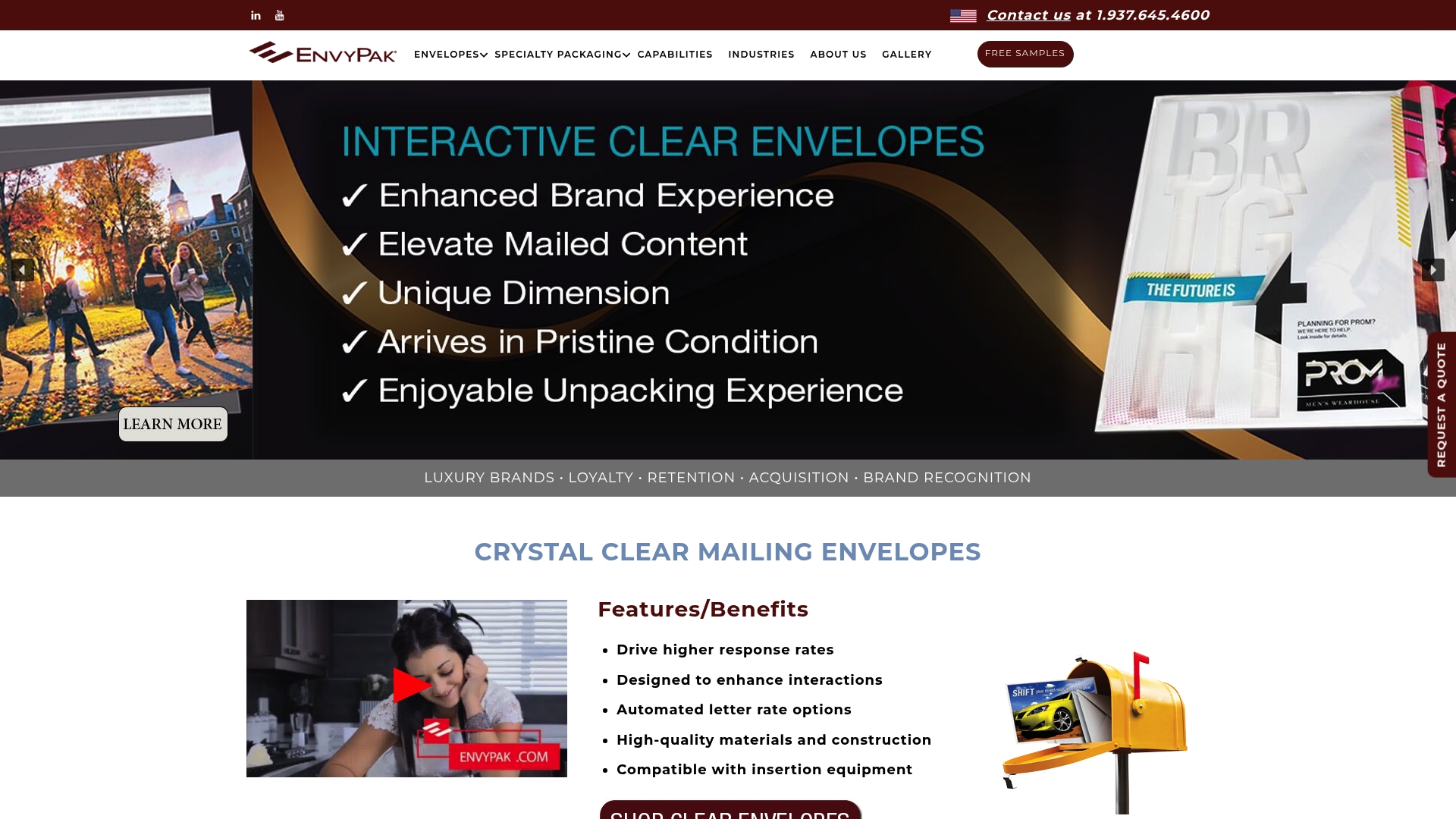
Envypak also offers custom printed envelopes and mailers that let you print recycling instructions, certifications, and brand messaging directly on the packaging surface. For teams sourcing recyclable mailing materials at scale, Envypak’s product range covers the full spectrum from crystal clear mailers to specialty formats, all designed to perform in automated mail processing environments. Explore the full range at envypak.com.
FAQ
What are the most recyclable mailing materials?
Paper-based mailers including flat kraft, honeycomb padded, and rigid stay-flat formats are 100% curbside recyclable. They are the most accessible recyclable option for both brands and consumers.
Can poly mailers be recycled?
Poly mailers made from LDPE (#4) or HDPE (#2) are recyclable but require store drop-off at film collection points. They are not accepted in curbside recycling programs.
Are hybrid paper-bubble mailers recyclable?
No. Hybrid mailers with a paper exterior and plastic bubble interior are rejected by recycling centers because the two materials cannot be separated during processing.
What is the difference between recyclable and biodegradable mailing materials?
Recyclable mailers re-enter a material recovery stream through municipal or store drop-off programs. Biodegradable mailers break down organically but require industrial composting conditions and contaminate recycling streams if mixed in.
How do recyclable mailers affect brand perception?
95% of consumers report that sustainable packaging significantly influences their brand perception. Using verifiably recyclable mailers with How2Recycle or FSC labeling builds consumer trust and reduces greenwashing risk.