

What Is Direct Mail Engagement? A 2026 Strategy Guide

Direct mail engagement is the measurable interaction recipients have with physical marketing mail, including opening, reading, responding, and converting. While digital channels dominate marketing budgets, response rates are 5 to 37 times higher for direct mail versus email. That gap is not a rounding error. It reflects a fundamental difference in how the human brain processes physical versus digital content. For marketing professionals and business owners, understanding what is direct mail engagement means understanding one of the highest-performing channels available in 2026.
What is direct mail engagement and why does it outperform digital?
Direct mail engagement, known in the industry as direct response marketing through physical channels, measures every meaningful action a recipient takes after receiving a piece of mail. That includes scanning a QR code, visiting a personalized URL, calling a phone number, or mailing back a reply card. The metric goes beyond delivery confirmation. It captures actual human behavior.
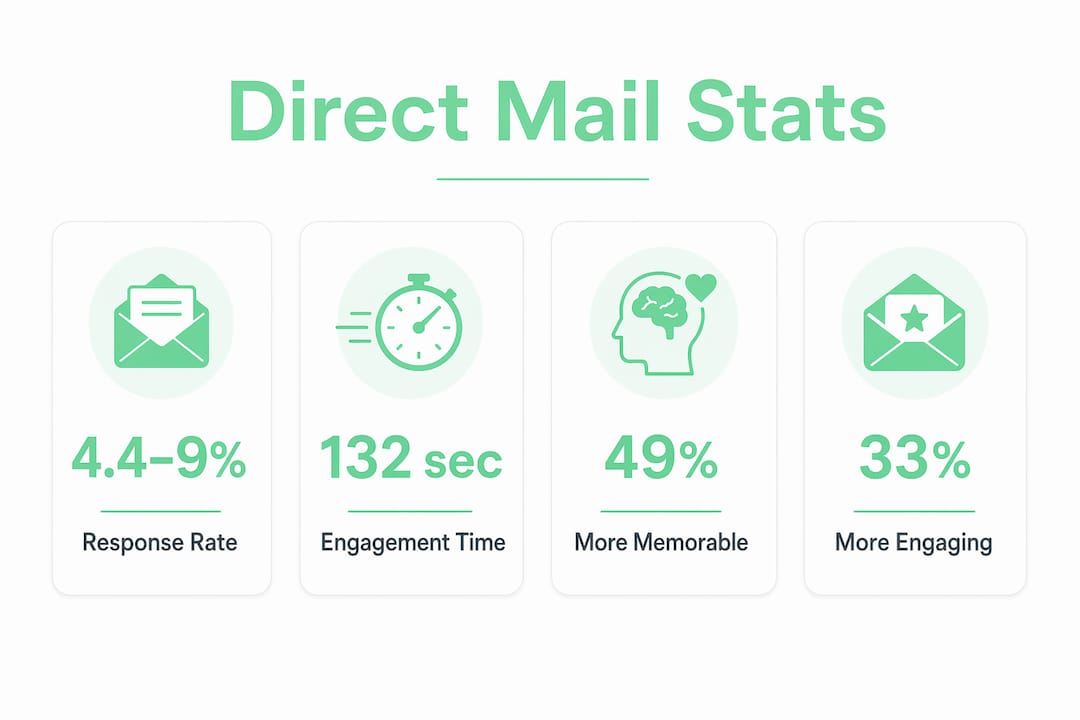
The performance numbers are hard to ignore. Direct mail averages a 4.4% response rate for cold prospects and up to 9% for house lists, compared to email’s 0.12–3%. That means a well-targeted direct mail campaign can outperform email by a factor of three to thirty. For any business running acquisition campaigns, that difference translates directly into cost per customer.

Physical mail also holds attention longer. Recipients spend 132 seconds on mail pieces versus 13.8 seconds on TV ads. A digital banner ad gets a fraction of a second. That extended attention window gives your message time to land, be read, and be remembered.
Direct mail is 49% more memorable and 33% more engaging than email. The reason is neurological. A Temple University study found that physical ads activate the ventral striatum, the brain region tied to desire and value, more strongly than digital ads. Mail does not disappear with a scroll. It sits on a desk, a kitchen counter, or a bulletin board, creating repeated exposure that digital simply cannot replicate.
How does direct mail compare to digital marketing channels?
| Metric | Direct Mail | Email Marketing |
|---|---|---|
| Prospect response rate | 4.4% | 0.12–3% |
| House list response rate | Up to 9% | Up to 3% |
| Average attention time | 132 seconds | Under 15 seconds |
| Memorability advantage | 49% more than email | Baseline |
| Average campaign ROI | 161% | Varies |
The comparison above shows direct mail wins on every engagement metric. But the channel also solves a problem digital cannot: ad blocking. An estimated one in three internet users runs an ad blocker. Direct mail arrives in the physical mailbox with zero filtering technology standing between your message and your recipient.
84% of marketing executives report direct mail delivers the highest ROI of any channel, with campaigns averaging $42 in revenue per $1 spent. That figure explains why 82% of marketers increased their direct mail budgets in 2025. The channel is not a legacy holdover. It is a performance channel with measurable returns.
Direct mail also benefits from a less crowded environment. The average American receives far fewer pieces of physical mail than email messages per day. Less competition in the mailbox means more attention per piece. That scarcity is a structural advantage you can build a campaign around.
For a deeper look at how these two channels stack up, the direct mail vs. email comparison on Envypak covers the performance benchmarks in detail.
What key factors drive higher engagement in direct mail campaigns?
The single greatest driver of direct mail success is list quality and audience segmentation. A brilliant creative sent to the wrong list will underperform a plain postcard sent to a perfectly matched audience. List hygiene, demographic precision, and behavioral segmentation determine whether your mail reaches people who actually want what you are offering.
Personalization is the second major driver. Variable data printing lets you customize names, offers, images, and even product recommendations at the individual level. A recipient who sees their name, their city, and a product they recently browsed responds at a fundamentally different rate than someone who receives a generic flyer. Personalized direct mail consistently outperforms static campaigns across industries.
Physical attributes matter more than most marketers expect. Using 16pt cardstock versus 10pt paper can increase perceived offer value by up to 35%. Heavier paper subconsciously signals quality and authority. The weight of the piece in someone’s hand shapes their perception of the brand before they read a single word. Format choices, including oversized postcards, dimensional mailers, and clear envelopes that reveal the contents, all affect open rates and engagement.
Timing and frequency also shape results. Direct mail pieces stay in a household for an average of 17 days, creating repeated brand exposure. A well-timed follow-up sequence, with mail arriving at intervals that match the buyer’s decision cycle, compounds that exposure into conversion.
Pro Tip: Suppress recent buyers and active customers from cold acquisition lists. Sending acquisition offers to people who already converted wastes budget and can irritate loyal customers. Clean your list before every send.
How can marketers effectively measure and track direct mail engagement?
Modern direct mail tracking closes the gap between physical and digital accountability. The four core tracking methods are:
- QR codes. Printed on the mail piece, QR codes send recipients to a landing page and record the scan event with timestamp and location data. They are the fastest way to connect a physical mail piece to a digital conversion path.
- Personalized URLs (PURLs). Each recipient receives a unique URL tied to their record. When they visit, you capture identity, behavior, and conversion data at the individual level.
- Business reply mail. Pre-addressed reply cards with barcodes track physical responses. When the card enters the USPS system, the barcode records the response event.
- Intelligent Mail barcodes (IMb). IMb tracking provides real-time visibility into where each piece is in the USPS delivery stream. You know when mail is in transit, delivered, or returned before recipients even open it.
These tools move direct mail from a “send and hope” channel to a data-generating asset. When integrated with a CRM like Salesforce or HubSpot, they let you trigger digital follow-ups the moment a piece is delivered, creating a coordinated sequence across channels.
| Tracking Method | What It Measures | Best Use Case |
|---|---|---|
| QR codes | Scans, landing page visits | Driving digital response |
| PURLs | Individual visits, conversions | Personalized campaigns |
| Business reply mail | Physical response rate | Subscription, donation drives |
| IMb barcodes | Delivery status in real time | Timing digital follow-ups |
Beyond response rate, conversion rate is the metric that connects mail to revenue. Response rate measures who engaged. Conversion rate measures who bought. Track both separately to understand where your funnel leaks.
Matchback analysis and holdout testing measure true incremental lift. A holdout group, typically around 10% of your list, receives no mail. Comparing their purchase behavior to the mailed group isolates the actual revenue impact of the campaign. Without a holdout group, you risk crediting direct mail for sales that would have happened anyway.
Pro Tip: Set up your holdout group before the campaign launches, not after. Retroactive holdout analysis introduces selection bias and produces unreliable lift numbers.
For a practical walkthrough of ROI measurement, Envypak’s guide on tracking direct mail ROI covers the full attribution process.
What strategic practices maximize direct mail engagement results in 2026?
The highest-performing direct mail campaigns in 2026 share five characteristics:
- Omnichannel sequencing. Mail does not work in isolation. Consumers are 28% more likely to engage with digital ads after receiving direct mail. A coordinated sequence, mail followed by a targeted social ad or email, multiplies the effect of both channels. Use IMb delivery data to trigger the digital follow-up the day the piece lands.
- Premium physical materials. Tactile psychology is real. Heavier paper, textured finishes, and clear envelopes that let recipients see the contents before opening all increase engagement. Envypak’s crystal clear mailers, for example, create immediate visual impact that standard white envelopes cannot match.
- Precise segmentation and personalization. Generic offers underperform. Segment by purchase history, geography, life stage, or behavioral data. Then use personalized direct mail techniques to match the offer to the individual.
- Frequency testing. One mailing rarely converts. Test two to three touch sequences against single sends to find the frequency that maximizes conversion without fatiguing your list.
- Creative testing with control groups. Run A/B tests on format, offer, and call to action. Use holdout groups to measure true lift. Treat every campaign as a data collection exercise, not just a revenue event.
“Direct mail should be treated as a data-generating asset within an omnichannel strategy, not a standalone channel.” Linemark, 2026
The direct mail trends for 2026 show personalization and omnichannel integration as the two fastest-growing practices among high-performing brands. Marketers who treat mail as a physical touchpoint in a connected customer journey consistently outperform those who run mail as a standalone blast.
For creative execution, strong direct mail design choices, including envelope format, color, and visible contents, determine whether a piece gets opened or recycled. The envelope is the first impression. Make it count.
Key Takeaways
Direct mail engagement outperforms digital channels on response rate, memorability, and ROI when campaigns combine precise targeting, quality materials, and rigorous measurement.
| Point | Details |
|---|---|
| Response rate advantage | Direct mail averages 4.4–9% response rates, far above email’s 0.12–3%. |
| Memorability and attention | Recipients spend 132 seconds with mail pieces and recall them 49% more than email. |
| List quality drives results | Audience segmentation and list hygiene matter more than creative design alone. |
| Measurement is now digital-grade | QR codes, PURLs, IMb barcodes, and holdout groups give direct mail full attribution capability. |
| Omnichannel integration multiplies ROI | Consumers are 28% more likely to engage with digital ads after receiving physical mail. |
Why I think direct mail’s reputation problem is the real opportunity
Most marketing teams I talk to still treat direct mail as the channel they use when digital gets expensive. That framing is backwards. Direct mail is not a fallback. It is a precision instrument that most competitors have deprioritized, which means the mailbox is less crowded than it has been in decades.
The marketers I have seen get the best results are not the ones with the biggest budgets. They are the ones who obsess over list quality before they spend a dollar on creative. A 2% improvement in list match rate consistently outperforms a redesigned mailer. That is a counterintuitive lesson that takes most teams too long to learn.
The measurement gap used to be a real problem. It is not anymore. IMb tracking, PURLs, and CRM integration give you the same attribution visibility you expect from paid search. The excuse that direct mail cannot be measured disappeared years ago. What remains is the discipline to actually set up holdout groups and run proper lift analysis.
My honest advice: treat your first three campaigns as learning investments. Test format, offer, and frequency. Build your holdout methodology before you scale. The brands that win with direct mail in 2026 are the ones that approach it with the same analytical rigor they apply to Google Ads or Meta campaigns.
Elevate your direct mail campaigns with Envypak
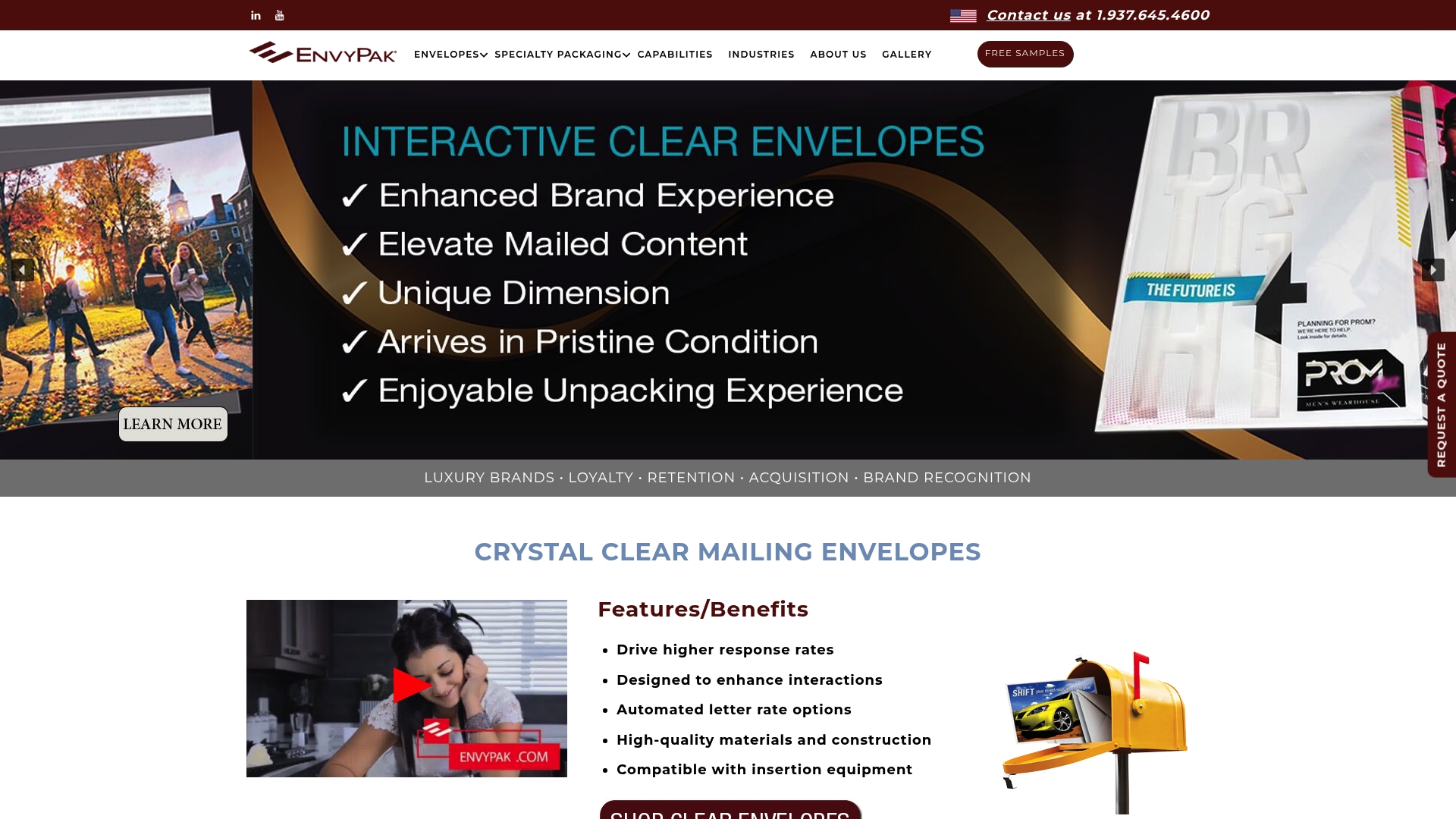
The physical quality of your mail piece shapes how recipients perceive your brand before they read a single word. Envypak’s crystal clear mailers let your creative work do the selling from the moment the piece lands in the mailbox. Recipients see the contents before opening, which drives higher open rates and stronger first impressions. Envypak also offers custom envelopes and mailers built specifically for direct mail campaigns, with automation compatibility and eco-friendly materials that align with modern brand standards. If you are serious about direct mail effectiveness, the packaging is not an afterthought. It is part of the strategy.
FAQ
What is direct mail engagement?
Direct mail engagement measures how recipients interact with physical marketing mail, including opening, reading, scanning QR codes, visiting PURLs, and responding. It is the primary metric for evaluating direct mail campaign effectiveness.
How do you measure direct mail response rates?
Response rate is calculated by dividing the number of replies or actions by the total number of pieces mailed. Tools like QR codes, PURLs, and Intelligent Mail barcodes track individual responses in real time.
Why does direct mail outperform email marketing?
Direct mail averages a 4.4–9% response rate versus email’s 0.12–3%, and recipients spend 132 seconds with mail pieces versus seconds with digital ads. Physical mail also bypasses ad blockers entirely.
What is a holdout group in direct mail?
A holdout group is a segment of your list, typically around 10%, that receives no mail during a campaign. Comparing their purchase behavior to the mailed group isolates the true incremental revenue impact of the campaign.
How does direct mail support omnichannel marketing?
Consumers are 28% more likely to engage with digital ads after receiving direct mail. Coordinating mail delivery data with digital retargeting creates a sequenced experience that outperforms either channel alone.