

What Is a Teaser Ad Mailer? A Marketer’s Guide

A teaser ad mailer is a direct mail piece that uses short, curiosity-driven copy on the outer envelope or cover panel to compel recipients to open it. The goal is simple: make the outside so intriguing that the reader cannot ignore what is inside. This format is one of the most proven tools in direct mail marketing, sitting at the intersection of psychology and print design. Marketers who understand what a teaser ad mailer is and how to deploy it correctly gain a measurable edge in open rates, engagement, and campaign response.
What is a teaser ad mailer and how does it work?
A teaser ad mailer works by placing a brief, compelling message on the outer surface of a mail piece before the recipient ever opens it. That message creates a gap between what the reader knows and what they want to know. Curiosity fills that gap, and opening the envelope becomes the only way to close it.

The psychological engine here is anticipation. Teaser campaigns release limited information over defined short periods, typically 1–6 weeks, using staged disclosure to build interest without frustrating recipients. Applied to a single mail piece, this principle means the outer envelope does one job: make the reader want more.
Teaser copy takes several forms:
- Brief headlines: “Your exclusive offer expires soon.”
- Questions: “What would you do with an extra $500 a month?”
- Testimonials or quotes: A single line from a satisfied customer printed on the envelope.
- Partial reveals: “Something special is waiting inside for you.”
The teaser copy on the outer envelope includes brief headlines, questions, testimonials, or quotes designed to entice opening. Each of these formats works because it promises a payoff without delivering it upfront.
Audience segmentation matters here. Teaser copy works best with warm audiences who already recognize your brand. A recipient who knows your company sees teaser copy as an invitation. A cold prospect who has never heard of you may read the same copy as spam. The strategy shifts depending on who is receiving the mail.
Pro Tip: Test your teaser copy on a small segment of your list before rolling out to the full campaign. What feels intriguing to you may read as vague to your audience.
Key design elements of effective teaser mailers
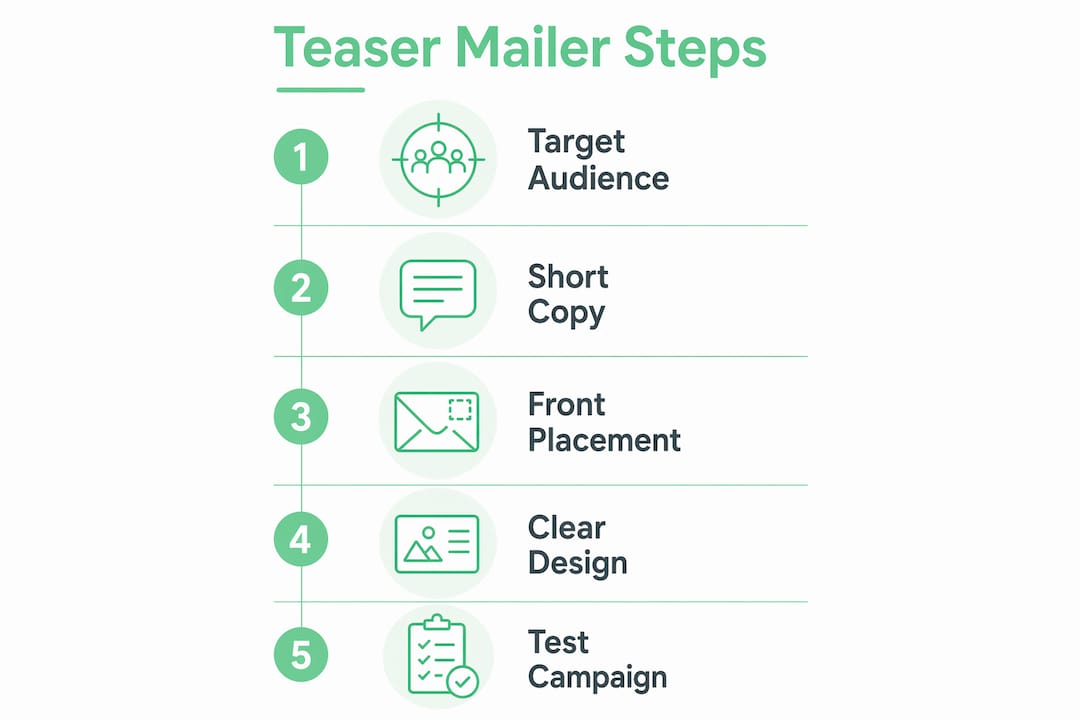
Good teaser mailer design is disciplined. Every element on the outer envelope must serve the single goal of getting the piece opened. Clutter kills curiosity.
Teaser copy length and placement
The most effective teaser copy is short, compelling, and subtle to avoid clutter and spam perception. Phrases like “You’ll want to see this…” or “A small surprise inside” balance intrigue with clarity. Copy that is too long reads like an ad. Copy that is too vague reads like junk mail. The sweet spot is 5–12 words that hint at a specific benefit without naming it outright.
Placement matters as much as length. Teaser copy typically appears on the front of the envelope, either in the upper left near the return address or centered below it. Some mailers use the back flap for a secondary teaser line, which catches readers who flip the envelope before opening.
Lift letters as teaser mailers
A lift letter is a folded insert with teaser copy printed on its outer cover panel. Lift letters are usually 5×6 inches or larger and carry phrases like “Read this only if you’ve already decided not to respond.” That line is a masterclass in reverse psychology. It targets the exact person most likely to ignore the main offer and pulls them back in.
Lift letters function as teaser mailers within a larger mail package. The outer envelope gets the piece opened. The lift letter gets the skeptic to read the full offer. Both rely on the same curiosity mechanism.
Visual design considerations
Strong teaser mailer design uses these principles:
- White space: A sparse envelope feels personal, not promotional.
- Font choice: Handwritten or serif fonts signal authenticity. Bold sans-serif fonts signal urgency.
- Color contrast: The teaser line should stand out from the envelope background without looking like a banner ad.
- Personalization cues: Printing the recipient’s name near the teaser copy increases the sense that the message is meant specifically for them.
Personalized or confidential cues like “For John’s eyes only” also serve a practical function in business mail. They reduce the chance that an office screener or assistant discards the piece before the intended recipient sees it.
Pro Tip: Use envelope design best practices as a checklist before printing. Small design errors on the outer envelope cost you the open before the offer ever gets a chance.
When to use teaser mailers versus other envelope strategies
Choosing between a teaser envelope, a blind envelope, and a plain envelope is not a matter of preference. It is a calculated decision based on audience type and campaign context.
Teaser copy on envelopes can increase open rates or decrease them if perceived as advertising. That dual outcome makes the choice consequential. Here is how to think through it:
-
Warm audiences, consumer campaigns: Teaser envelopes perform well. Recipients recognize the brand and read teaser copy as a preview of something relevant. Consumer offers, loyalty programs, and seasonal promotions all benefit from a well-crafted teaser line.
-
Cold prospects, professional services: Plain or blind envelopes outperform teaser versions. A law firm, financial advisor, or B2B service provider sending to a cold list gets better results with a clean, professional envelope that does not signal advertising before the recipient decides to engage.
-
Gatekeeper environments: Business mail often passes through an assistant or office manager before reaching the intended recipient. Teaser copy that reads as promotional gives screeners a reason to discard the piece. Personalized, confidential-looking envelopes bypass this filter more reliably.
-
Brand awareness campaigns: When the goal is visibility rather than immediate response, teaser envelopes reinforce brand identity. The outer message becomes part of the brand experience, not just a door to the offer.
The core principle is this: teaser copy rewards familiarity. The more a recipient already knows and trusts your brand, the more effective a teaser envelope becomes. For creative direct mail ideas that match envelope strategy to audience type, testing both approaches on split lists gives you real data instead of assumptions.
How to integrate teaser mailers into multi-touch campaigns
A teaser mailer works best as the first piece in a planned sequence, not as a standalone effort. Typical teaser-led direct mail sequences start with a teaser mailer, followed by an offer mailer, then a reminder mailer in a classic three-touch process.
Each touch has a distinct job:
- Touch 1 (Teaser mailer): Prime the recipient. Create curiosity and brand recognition before the full offer arrives. The goal is not conversion. The goal is attention.
- Touch 2 (Offer mailer): Deliver the full message. By the time this piece arrives, the recipient already has context. Open rates on the offer mailer rise because the teaser has done its work.
- Touch 3 (Reminder mailer): Capture the undecided. Some recipients need a second prompt. The reminder references the original offer and adds urgency or a deadline.
Timing between touches matters. New teaser elements should appear at least weekly to maintain momentum and curiosity. In a direct mail sequence, spacing touches 7–10 days apart keeps the campaign present in the recipient’s mind without feeling aggressive.
Measuring teaser open rates alone is insufficient without evaluating the full sequence. Track response rates at each touch, not just the first. A teaser that generates strong opens but weak offer-mailer responses signals a mismatch between the promise on the outside and the content on the inside.
Testing is the only way to know what works. Run A/B splits on teaser copy, envelope format, and timing. Use direct mail result stories from real campaigns to benchmark your own performance against proven approaches.
Key Takeaways
A teaser ad mailer drives opens by placing curiosity-driven copy on the outer envelope, and its full value only appears when it is part of a planned, multi-touch direct mail sequence.
| Point | Details |
|---|---|
| Core definition | A teaser ad mailer uses short, intriguing copy on the outer envelope to compel recipients to open the piece. |
| Audience fit | Teaser envelopes work best for warm, brand-familiar audiences; plain envelopes outperform for cold or professional lists. |
| Design discipline | Effective teaser copy is 5–12 words, placed prominently, and paired with clean visual design that avoids a promotional look. |
| Lift letter role | Lift letters with teaser cover panels boost response by targeting skeptical recipients within a larger mail package. |
| Campaign sequencing | Teaser mailers perform best as the first touch in a three-part sequence: teaser, offer, and reminder. |
What I’ve learned about teaser mailers that most guides skip
The biggest mistake I see marketers make with teaser mailers is treating the outer envelope as the finish line. They spend hours crafting the perfect teaser line, then rush the inside content. A minimalist teaser outside with weak inside content frustrates recipients and damages response rates. The teaser creates a contract with the reader. If the inside does not deliver, you have broken that contract and burned trust you cannot easily rebuild.
The second thing I have learned is that testing is not optional. Lift letters with teaser covers can boost response, but the only way to know which copy works for your specific audience is to test it. I have seen campaigns where a question-format teaser outperformed a benefit-statement teaser by a wide margin, and I have seen the reverse. There is no universal winner. There is only the version your audience responds to.
My honest advice: treat the teaser as a promise, not a trick. The best teaser copy I have encountered does not try to deceive. It genuinely previews something valuable. That approach builds the kind of anticipation that converts, rather than the kind that irritates. Pair your teaser strategy with cross-channel marketing insights to reinforce the message across touchpoints and give your campaign the best possible reach.
How Envypak’s clear envelopes support teaser campaigns
Teaser ad mailers depend on a strong first impression, and the envelope itself is part of that impression.
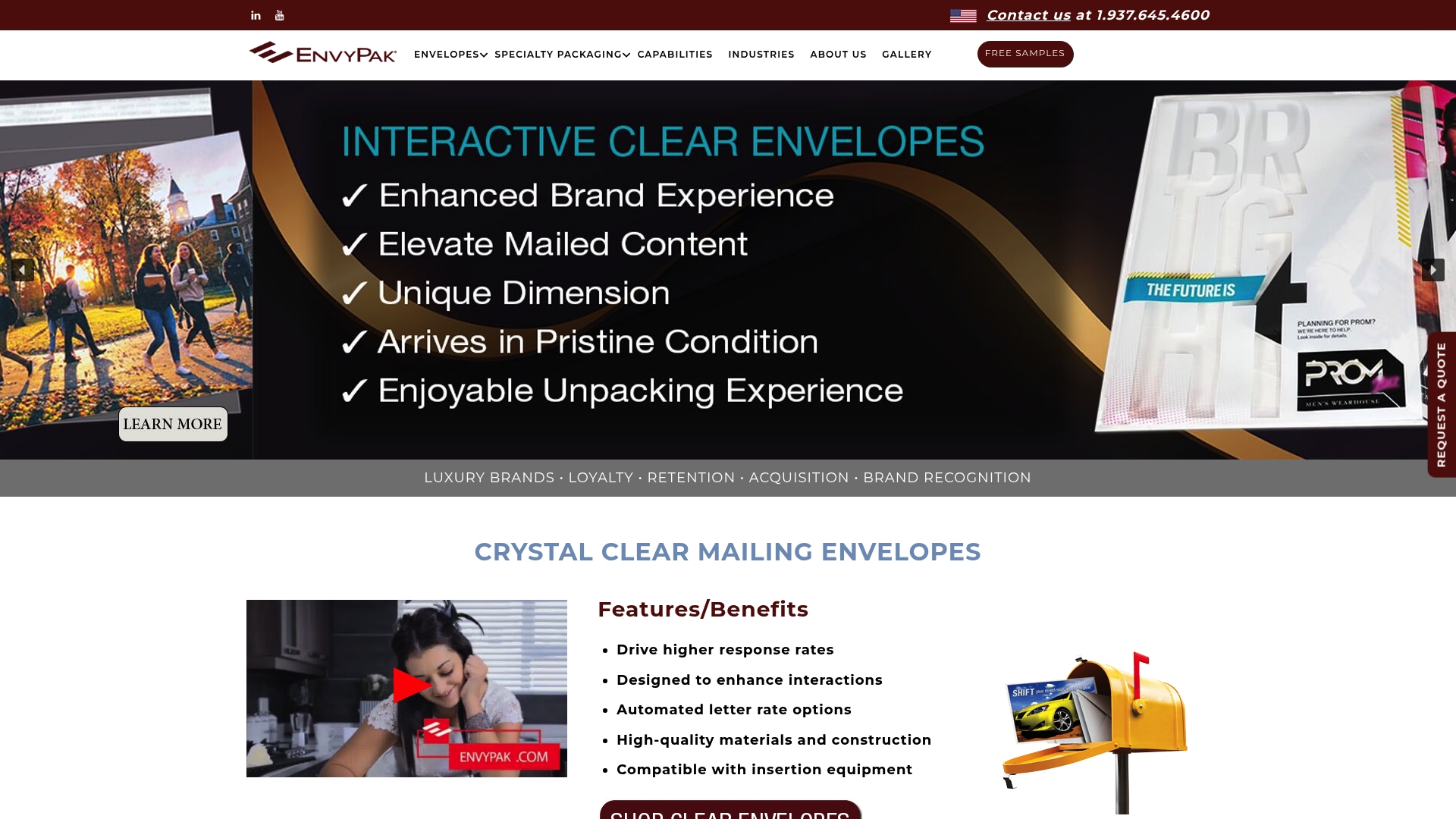
Envypak’s crystal clear mailing envelopes give marketers a distinct advantage: the contents are visible before the recipient even opens the piece. That visibility creates its own form of teaser effect, letting the design, color, and offer inside do the work of generating curiosity. Envypak envelopes are automation-compatible, eco-friendly, and built for high-volume direct mail campaigns. For marketers ready to take their teaser campaigns further, Envypak’s direct mail envelopes combine visual impact with the production reliability that serious campaigns require. See the full range at Envypak clear envelopes.
FAQ
What is a teaser ad mailer in direct mail?
A teaser ad mailer is a direct mail piece with short, curiosity-driven copy printed on the outer envelope or cover panel. Its purpose is to compel the recipient to open the piece by hinting at a valuable offer inside.
What is the difference between a teaser envelope and a blind envelope?
A teaser envelope carries copy designed to spark curiosity, while a blind envelope has no promotional copy and looks like personal correspondence. Blind envelopes work better for cold audiences and professional services; teaser envelopes perform better with warm, brand-familiar recipients.
What makes good teaser copy for a mailer?
Effective teaser copy is 5–12 words, specific enough to hint at a benefit, and subtle enough to avoid looking like an ad. Phrases like “A small surprise inside” or “You’ll want to see this…” outperform generic promotional language.
What is a lift letter and how does it relate to teaser mailers?
A lift letter is a folded insert, typically 5×6 inches or larger, with teaser copy on its outer cover panel. It functions as a teaser mailer within a larger mail package, targeting skeptical recipients who might otherwise ignore the main offer.
How many touches should a teaser direct mail campaign include?
A standard teaser campaign uses three touches: a teaser mailer, an offer mailer, and a reminder mailer. Spacing each touch 7–10 days apart maintains momentum and gives recipients time to respond before the next piece arrives.