

What Is a Poly Mailer? Uses, Benefits, and Types
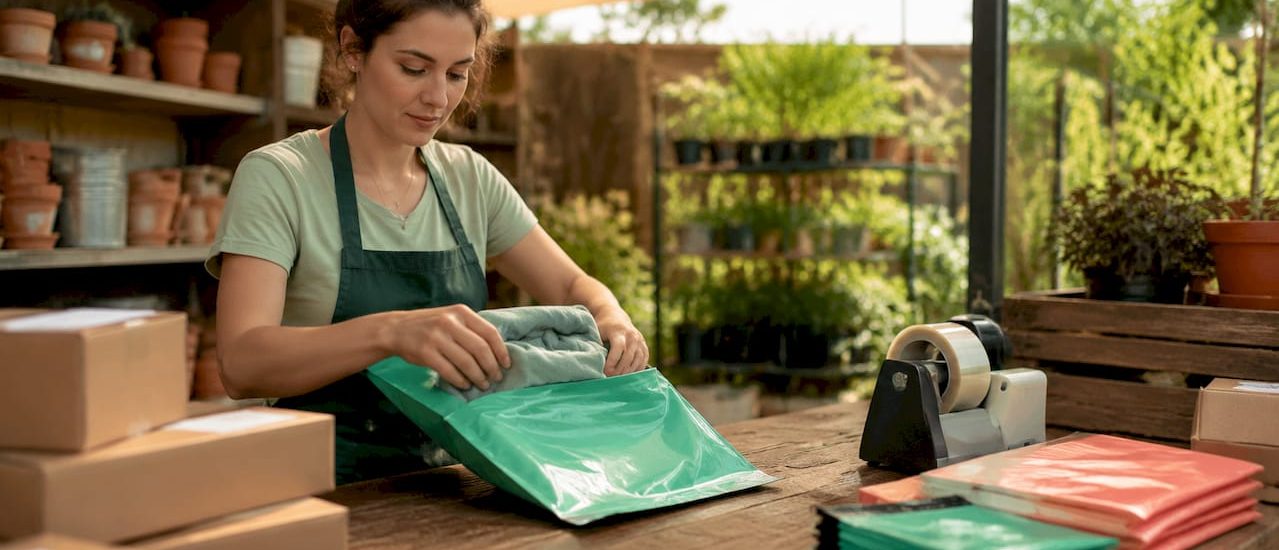
A poly mailer is a lightweight, flexible polyethylene shipping envelope designed to send non-fragile, soft goods like apparel, documents, and textiles at a fraction of the cost and weight of a cardboard box. The industry term you’ll see on carrier invoices and fulfillment software is “poly mailer” or “polybag mailer,” and both refer to the same product. Standard poly mailers are self-sealing, water-resistant, and built from low-density polyethylene (LDPE) or linear low-density polyethylene (LLDPE). For any e-commerce seller, subscription box operator, or small business owner shipping soft goods, understanding the poly mailer definition is the first step toward smarter, cheaper fulfillment.
What is a poly mailer made from?
Poly mailers are constructed from multi-layer polyethylene films where each layer serves a specific function. The outer layer provides tensile strength and printability. The inner layer is engineered for sealability and surface smoothness. Together, these layers determine how well the mailer resists punctures, tears, and moisture.
The two most common base materials are:
- LDPE (Low-Density Polyethylene): Soft, flexible, and cost-effective. Used in standard opaque mailers for everyday apparel shipping.
- LLDPE (Linear Low-Density Polyethylene): Stronger and more puncture-resistant than LDPE. Preferred for heavier soft goods or items with minor protrusions like zippers or buttons.
- Polypropylene: Stiffer and clearer than polyethylene. Used in crystal-clear mailers where product visibility matters, such as promotional materials or retail packaging.
- Co-extruded multi-layer film: Combines two or more resin types in a single film run. This process, called co-extrusion, allows manufacturers to tune strength, clarity, and sealing performance without increasing overall thickness.
Thickness is measured in mils (thousandths of an inch). Most standard poly mailers run between 2.0 and 2.5 mil. Heavy-duty variants reach 3.0 mil or higher and are better suited for heavier items or rough handling environments. Padded or bubble-lined variants add a layer of air-cushion film inside, which increases protection for small, semi-fragile items like jewelry or electronics accessories.
One detail most buyers miss: layer construction affects performance more than raw thickness alone. A well-engineered 2.0 mil co-extruded film can outperform a poorly constructed 2.5 mil single-layer film in tear resistance. When comparing suppliers, ask for the layer breakdown, not just the mil spec.
Pro Tip: Ask your supplier for a co-extrusion spec sheet before ordering in bulk. A mailer rated at 2.5 mil with a dedicated outer strength layer will outperform a generic 2.5 mil single-layer option in real-world drop and drag tests.
What are the benefits of poly mailers for shipping?
The core advantage is cost. Standard poly mailers weigh 20 to 50 grams, while comparable cardboard boxes weigh 80 to 500 grams. That weight difference directly reduces postage on every single shipment, and the savings compound fast at volume. For a business shipping 500 orders per week, switching from boxes to poly mailers for eligible soft goods can cut packaging material costs by a significant margin.
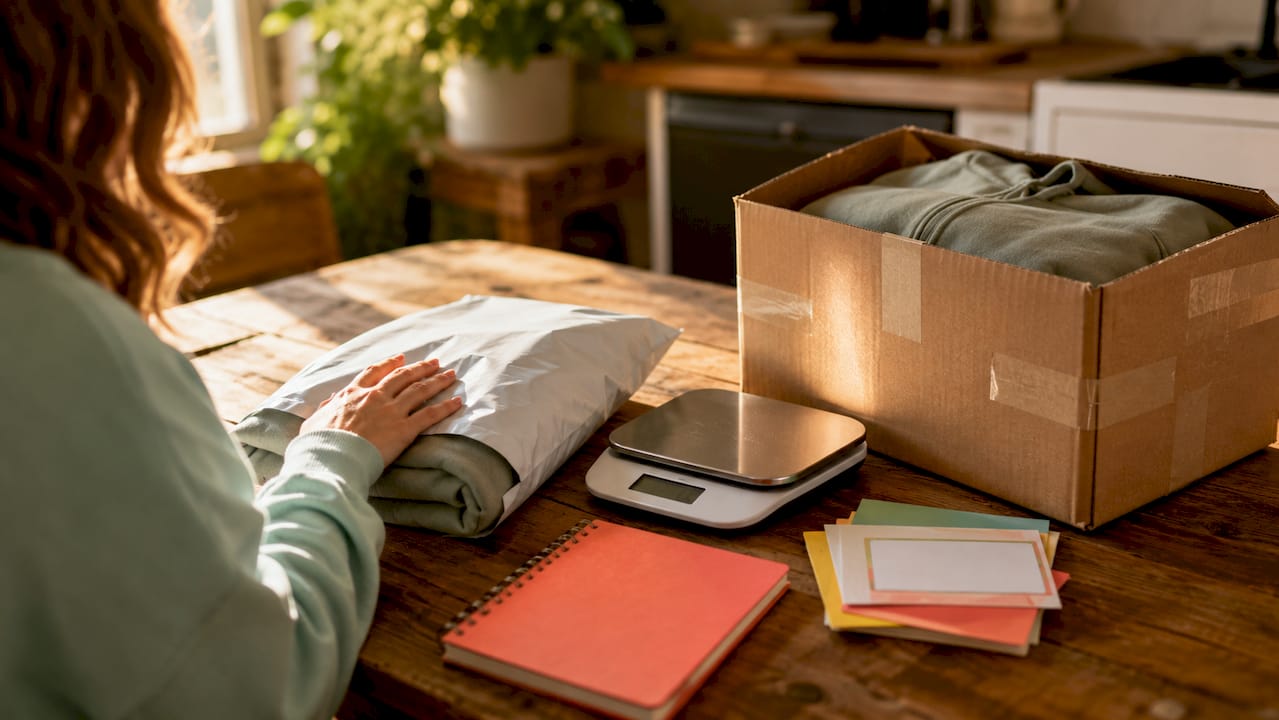
Beyond postage, poly mailers compress around their contents, reducing package volume and lowering dimensional weight charges from carriers like UPS, FedEx, and USPS. Rigid boxes create dead air space that inflates DIM weight calculations. A poly mailer conforms to the item, so you pay for what you actually ship.
Poly mailer vs. bubble mailer vs. box: a quick comparison
| Packaging type | Best for | Weight | Water resistance | Cushioning |
|---|---|---|---|---|
| Poly mailer | Soft goods, apparel, documents | Very light | High | None |
| Bubble mailer | Small semi-fragile items | Light | Moderate | Low to moderate |
| Cardboard box | Fragile, rigid, or heavy items | Heavy | Low | High (with fill) |
Additional benefits worth noting:
- Water and dirt resistance: Polyethylene naturally repels moisture, protecting contents from rain, humidity, and warehouse condensation.
- Storage efficiency: Poly mailers store flat and reduce storage footprint by up to 95% compared to pre-assembled boxes. A pallet of flat mailers holds far more units than the same pallet stacked with boxes.
- Packing speed: The peel-and-seal closure takes seconds. No tape gun, no box folding, no void fill. This matters in high-volume fulfillment centers where packing time per order directly affects labor costs.
- Branding surface: The exterior of a poly mailer is a printable canvas. Custom-printed mailers with logos, brand colors, or promotional messaging turn every shipment into a brand touchpoint.
The one real limitation: poly mailers offer no padding for fragile or sharp items. A ceramic mug, a glass bottle, or a product with sharp corners needs a box with cushioning. Using a poly mailer for the wrong product type leads to damage claims, returns, and lost customer trust.
Pro Tip: For items that are mostly soft but include a small hard component, like a t-shirt with a metal pin, place the hard component in a small padded pouch inside the poly mailer. You keep the cost and weight benefits of the mailer without risking damage.
How to use and seal poly mailers correctly
Proper sealing is where most shipping errors originate. A poly mailer that reopens in transit exposes your product, creates a customer service problem, and can result in a lost package. The peel-and-seal adhesive strip on a quality mailer bonds in under 15 seconds when applied correctly.
Follow these steps every time:
- Place your item inside the mailer. Leave enough room so the flap folds flat without stretching over the contents. An overstuffed mailer puts stress on the seal line.
- Check the sealing area. Run your finger along the adhesive strip zone. Any dust, oil from your hands, or moisture will compromise the bond. Wipe the area with a dry cloth if needed.
- Peel the liner strip. Pull it cleanly and evenly. Do not touch the exposed adhesive with your fingers.
- Fold the flap down and align it. Make sure the flap is centered and straight before pressing. A crooked seal creates weak spots at the edges.
- Press firmly across the full width. Use the heel of your hand and apply consistent pressure from one side to the other. Do not just press the center.
- Apply your shipping label on the flattest surface. Applying labels on the flattest area reduces read errors at carrier scanning stations and keeps the label from peeling at corners.
Choosing the right size matters as much as sealing technique. An oversized mailer allows the item to shift during transit, which increases the chance of damage even though the mailer itself is water-resistant. Select the smallest size that allows the flap to close flat without tension.
Pro Tip: If you are shipping in high-humidity environments or during rainy seasons, choose non-perforated poly mailers. Perforated or tear-strip variants can compromise water resistance at the perforation line, which defeats one of the primary reasons to use a poly mailer in the first place.
What are the best use cases and limitations of poly mailers?
Poly mailers are the default packaging choice for a specific category of products. Understanding where they work and where they fail saves you money and protects your customer relationships.
Ideal products for poly mailers:
- Clothing and apparel (t-shirts, leggings, socks, hats)
- Soft accessories (scarves, belts, fabric bags)
- Documents and printed materials
- Lightweight textiles and linens
- Subscription box inserts and promotional materials
- Flexible toys and stuffed animals
Products that require alternatives:
- Glassware, ceramics, or any breakable item
- Electronics with screens or rigid housings
- Products with sharp edges or protruding hardware
- Items over 5 lbs where box rigidity aids handling
The packaging decision centers on product risk: if moisture and dirt are the primary threats and the product is soft, a poly mailer is the right call. If impact or compression is the risk, move to a bubble mailer or box.
Industry applications and customization
| Industry | Typical use | Customization benefit |
|---|---|---|
| Fashion e-commerce | Apparel and accessories | Branded print builds unboxing experience |
| Subscription boxes | Monthly soft goods inserts | Color-coded mailers by subscription tier |
| Direct mail marketing | Promotional materials and catalogs | Clear poly mailers showcase contents before opening |
| 3PL and fulfillment | High-volume soft goods | Standardized sizes speed up packing workflows |
Custom-printed poly mailers, available from suppliers including Envypak and specialty custom mailer box producers, let businesses turn packaging into marketing. A mailer printed with your brand’s color palette and logo costs marginally more per unit but delivers a consistent brand impression at every doorstep. For direct mail campaigns specifically, clear poly mailers go further. They let recipients see the contents before opening, which drives higher engagement rates than opaque alternatives.
On the environmental side, LDPE poly mailers are technically recyclable through store drop-off programs in the U.S. (Store Drop-Off #4 plastic). They are not accepted in curbside recycling bins in most municipalities. Brands prioritizing sustainability should look at recycled-content poly mailers or compostable alternatives, though compostable options currently carry a higher per-unit cost.
Key takeaways
Poly mailers are the most cost-efficient packaging option for soft, non-fragile goods, and correct material selection, sizing, and sealing technique determine whether they protect your product or create returns.
| Point | Details |
|---|---|
| Material drives performance | Co-extruded LLDPE films outperform single-layer LDPE in puncture resistance at the same thickness. |
| Weight savings are real | Poly mailers weigh 20 to 50 grams versus 80 to 500 grams for boxes, cutting postage on every shipment. |
| Sealing requires clean surfaces | Dust, oil, or moisture on the adhesive strip causes reopened packages and lost shipments. |
| Size selection prevents damage | Oversized mailers allow product movement that causes damage even when the mailer stays sealed. |
| Not universal packaging | Fragile, sharp, or heavy items need bubble mailers or rigid boxes regardless of cost savings. |
Why sealing quality is the detail most shippers underestimate
I have reviewed hundreds of fulfillment operations, and the single most common source of shipping complaints is not carrier mishandling. It is a poly mailer that opened in transit because someone sealed it over a crease, a wrinkle, or a dusty surface. The mailer did its job. The packing process did not.
The operational fix is simple but requires discipline. Post a laminated sealing checklist at every packing station. Require packers to wipe the seal zone before peeling the liner. Spot-check five sealed mailers per shift by trying to pull the flap open. If it opens with moderate hand pressure, your surface prep is failing.
On the branding side, I think most businesses leave real value on the table by defaulting to plain white or gray mailers. A custom-printed poly mailer costs roughly 10 to 20 percent more per unit than a blank one. But it turns every delivery into a brand impression at the customer’s door, in their building lobby, and in any unboxing content they share. For fashion and lifestyle brands especially, that impression compounds over time in ways that are hard to quantify but very real.
My recommendation for businesses just starting out: order a sample pack of three or four sizes before committing to bulk. The difference between a mailer that fits your product snugly and one that is two inches too wide is the difference between a clean delivery and a damage claim.
— James
Ship smarter with Envypak poly mailers
Envypak produces premium clear poly mailers built for businesses that need reliable adhesive closures, consistent film quality, and the option to customize. Whether you are shipping apparel, promotional materials, or subscription inserts, Envypak’s mailer lineup covers standard opaque, crystal-clear, and custom-printed formats. Clear poly mailers in particular give your recipients a preview of the contents before they even open the package, which drives engagement in ways a plain brown envelope never will. Browse Envypak’s full selection of custom envelopes and mailers to find the right fit for your product and brand, and take advantage of bulk pricing that makes the switch from boxes genuinely cost-effective.
FAQ
What is a poly mailer used for?
A poly mailer is used to ship soft, lightweight, non-fragile goods like apparel, textiles, and documents. It is the standard packaging choice for e-commerce sellers who need a water-resistant, low-cost alternative to cardboard boxes.
How do poly mailer dimensions work?
Poly mailer dimensions are listed as width by length in inches, measured before sealing. Common sizes range from 6×9 inches for small accessories up to 19×24 inches for folded garments or multi-item orders.
Are poly mailers waterproof?
Poly mailers are water-resistant, not fully waterproof. Standard non-perforated LDPE or LLDPE mailers repel rain and surface moisture effectively, but prolonged submersion or perforated variants can allow water infiltration.
What is the difference between a poly mailer and a bubble mailer?
A poly mailer is a flat polyethylene envelope with no internal cushioning, suited for soft goods. A bubble mailer adds a layer of air-bubble film inside for light cushioning, making it better for small semi-fragile items like jewelry or electronics accessories.
Can poly mailers be recycled?
Most poly mailers made from LDPE are recyclable through store drop-off programs in the U.S. under the #4 plastic category. They are not accepted in standard curbside recycling bins, so check local guidelines or look for eco-friendly material options before choosing your mailer type.