

What Is a Creative Mail Piece? A 2026 Guide

A creative mail piece is a physical direct mail item engineered with distinct design, material, and messaging strategies to capture recipient attention and drive measurable marketing responses. Unlike standard flyers or postcards, creative direct mail uses pattern interruption, tactile elements, and digital integration to stand out in a crowded mailbox. Research shows these techniques can boost response rates by 135% compared to conventional formats. The industry term for this category is direct response mail, and understanding what separates a forgettable piece from a high-converting one is the foundation of any serious mail campaign.
What is a creative mail piece and why does it matter?
A creative mail piece is any physical marketing item that breaks the predictable pattern of standard mail through unique formats, materials, or messaging. The goal is not aesthetics for its own sake. Every design choice must drive response rather than simply look attractive. Think of it as a salesperson printed on paper and sealed in an envelope.
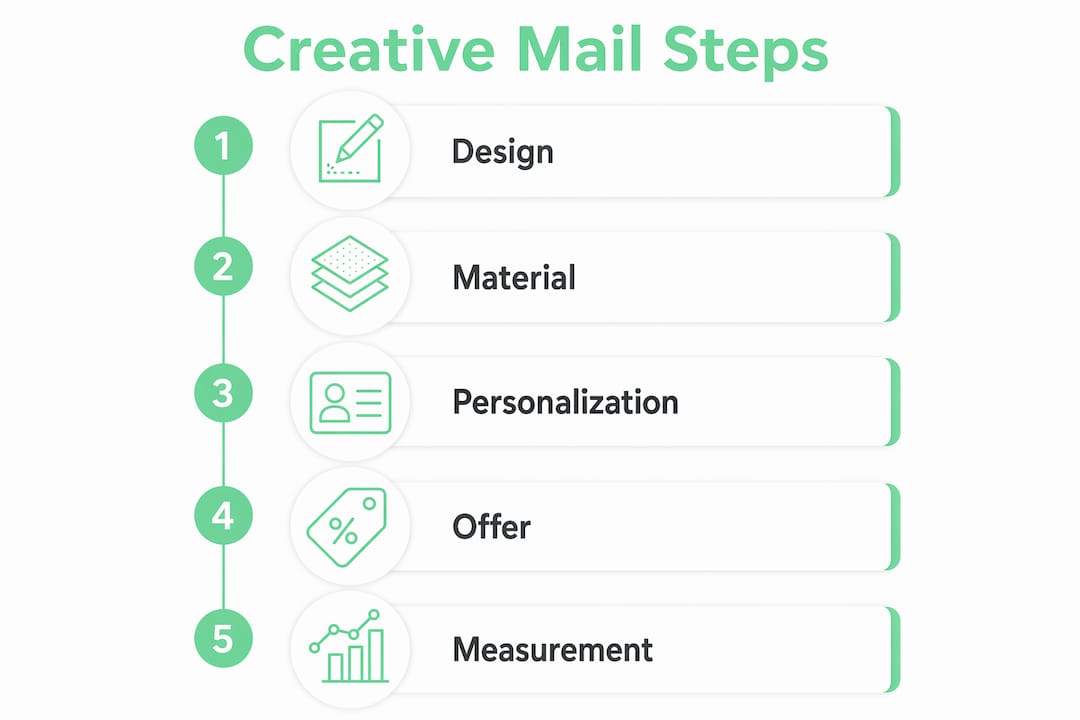
The most effective creative mail pieces share four defining characteristics. First, they use unconventional physical formats such as die-cuts, oversized dimensions, or non-rectangular shapes that interrupt the visual monotony of a typical mail stack. Second, they incorporate tactile elements like textured paper, embossing, or weighted materials that create a sensory experience before the recipient even reads a word. Third, they carry personalized content tied to recipient data. Fourth, they include a digital trigger, whether a QR code, NFC tag, or augmented reality prompt, that moves the reader from physical mail to an online conversion point.

The business case is concrete. 57% of direct mail recipients visit a brand’s website after receiving a piece. That figure makes creative mail a genuine lead generation channel, not a legacy tactic. For marketing professionals evaluating channel mix, that visit rate rivals many paid digital campaigns at a fraction of the audience saturation.
What design elements make a mail piece creative and effective?
Design is where most creative mail pieces succeed or fail within the first three seconds of contact. The three-second rule is the central challenge: a recipient decides whether to engage or discard a piece almost instantly. Winning that moment requires deliberate choices across format, material, and visual hierarchy.
Format and material choices that interrupt attention
The most reliable pattern interruption techniques include:
- Dimensional mail and lumpy mailers: Packages with physical bulk achieve nearly 100% open rates in B2B settings because they bypass gatekeepers and trigger curiosity before the recipient knows what is inside. Response rates for dimensional mail run between 5% and 15%, compared to fractions of a percent for most digital channels.
- Die-cuts and non-standard shapes: A postcard shaped like a product, a key, or a door hanger registers as different before the brain processes any copy.
- Heavy paper stock and specialty finishes: Matte lamination, spot UV coating, and soft-touch finishes signal quality and slow the reader down. Weight alone communicates value.
- Clear envelopes: When the mail piece inside is visually compelling, a transparent outer envelope removes the barrier between the design and the recipient’s eye. Envypak’s crystal clear mailers are built specifically for this effect.
Visual hierarchy: offer first, logo second
Seasoned practitioners prioritize offer and CTA prominence over logo size. This runs counter to brand team instincts, but the data supports it. A recipient scanning a postcard for three seconds will read the largest, most contrasting element first. If that element is a logo, you have wasted the moment. If it is a benefit statement or dollar figure, you have earned attention.
Color psychology reinforces hierarchy. High-contrast combinations like black on yellow or white on deep red draw the eye to CTAs. Matte backgrounds with glossy spot UV on key phrases create a tactile focal point that guides the reader’s hand as well as their gaze.
Pro Tip: When reviewing a proof, squint until the design blurs. Whatever you can still read is what your recipient will register in three seconds. If it is not your offer or headline, redesign the layout.
How does personalization and technology enhance creative mail pieces?
Personalization transforms a broadcast message into a one-to-one communication. Variable Data Printing (VDP) allows marketers to swap images, offers, headlines, and layouts dynamically across a print run, so a recipient in Chicago sees a different visual and offer than one in Miami, all within the same campaign. When CRM data informs these variables, the result is mail that feels written for a specific person rather than a demographic segment.
The technology layer extends well beyond printing. Effective creative direct mail ideas in 2026 incorporate:
- Dynamic QR codes: Unlike static codes, dynamic QR codes track individual scan events, redirect to personalized landing pages, and update destination URLs without reprinting. This makes them the most practical bridge between physical mail and digital conversion.
- NFC tags: Near-field communication chips embedded in a mail piece allow smartphone users to tap and instantly access a product page, video, or checkout flow. The friction is near zero.
- Augmented reality triggers: AR-enabled mail pieces use printed markers that activate 3D product visualizations or video overlays when scanned with a smartphone camera. Digital integrations like AR transform static mail into interactive experiences that drive measurable engagement.
For a deeper look at how animated and interactive content fits into physical mail campaigns, Envypak’s resource on animated mail content covers the practical execution side.
Pro Tip: Every digital transition point should require one action or fewer. A QR code that sends recipients to a homepage instead of a dedicated landing page with a pre-filled form loses conversions at every unnecessary step.
What messaging strategies drive conversions in creative mail pieces?
Strong design gets a piece opened. Strong messaging gets it acted on. Successful mail campaigns feature benefit-led headlines readable in under two seconds, a single clear offer, and a CTA prominent enough to find without searching. These are not stylistic preferences. They are conversion mechanics.
Follow this sequence when building your messaging structure:
- Write the headline last. Draft your offer and CTA first, then write a headline that frames the benefit those elements deliver. Headlines written in isolation often describe the product rather than the outcome the recipient wants.
- Limit yourself to one offer per piece. Multiple offers split attention and reduce conversions. If you have two strong offers, run two separate mail pieces and test them against each other.
- Set a deadline. Expiration dates create urgency without requiring discounting. “Offer valid through [date]” outperforms open-ended offers in nearly every direct mail test.
- Size your CTA for scanning. A font size of 18 to 24 points for the primary call to action is the standard recommendation. Anything smaller disappears in a quick scan.
- Write teaser copy on the outer envelope. A question or partial statement on the envelope surface creates a curiosity gap that pulls recipients inside. “Your exclusive rate is waiting” works. “Important information enclosed” does not.
A direct mail package acts as a salesperson in an envelope, and every element must be capable of converting independently. Recipients do not always read in sequence. A reply card pulled out first must sell the offer on its own. A letter read without the brochure must still communicate enough value to prompt action.
Pro Tip: Match your incentive to the size of your ask. A small offer on a high-cost ask kills response rates. If you are asking someone to schedule a sales call, offer something worth their time, not a branded pen.
How do you evaluate and optimize creative mail campaign performance?
Measurement is where most direct mail campaigns underinvest. Without tracking, you cannot distinguish a creative success from a format that happened to reach a warm list at the right time.
| Metric | What to track | Optimization tactic |
|---|---|---|
| Response rate | Replies, calls, form fills per pieces mailed | A/B test one variable per send: format, offer, or list segment |
| Website visit rate | Unique URL or QR scan events per campaign | Use dedicated landing pages per mail version |
| Conversion rate | Purchases or leads divided by responses | Align landing page offer exactly with mail piece offer |
| Cost per acquisition | Total campaign cost divided by conversions | Compare against digital CPA to justify mail budget |
| Mail arrival window | Delivery confirmation vs. response spike timing | Schedule follow-up email or digital ad within the 5 to 7 business day arrival window |
Timing is a frequently overlooked optimization lever. First-Class mail typically arrives within five to seven business days. Coordinating a digital retargeting ad or email to land in the same window as the physical piece creates a multi-channel reinforcement effect that lifts overall response. Envypak’s direct mail result stories document how this kind of coordinated timing has improved campaign outcomes across industries.
A/B testing in direct mail works best when you isolate one variable per test. Changing the format, offer, and list segment simultaneously makes it impossible to identify what drove the result. Run format tests first, then offer tests, then list refinements. Build a testing log so institutional knowledge accumulates across campaigns rather than disappearing after each send.
Key takeaways
Creative mail pieces convert because they combine physical pattern interruption with clear offers, personalized content, and digital triggers that move recipients from mailbox to measurable action.
| Point | Details |
|---|---|
| Pattern interruption drives opens | Dimensional formats, die-cuts, and heavy stock achieve open rates standard mail cannot match. |
| Hierarchy determines response | Place your offer and CTA before your logo in every layout to capture the three-second scan. |
| Personalization multiplies relevance | Variable Data Printing and CRM integration turn a broadcast piece into a one-to-one message. |
| Digital triggers close the loop | Dynamic QR codes, NFC tags, and AR markers connect physical mail to trackable online conversions. |
| Measurement enables improvement | Track response rate, visit rate, and CPA per campaign version to identify what actually works. |
Why the best creative mail I’ve seen ignores half the advice online
Most articles on creative direct mail ideas treat creativity as a visual exercise. After watching hundreds of campaigns perform, I have come to a different conclusion. The pieces that generate the highest response rates are almost never the most visually spectacular ones. They are the ones where the offer is so clear and the incentive so well-matched to the ask that the design almost does not matter.
The multi-sensory trend in B2B mail is real and worth the investment. A weighted package with a handwritten note and a relevant physical object inside will get opened and remembered in ways a glossy brochure never will. But that investment only pays off if the message inside is as sharp as the packaging. I have seen beautifully produced dimensional mailers with three competing offers, no deadline, and a CTA buried in the fourth paragraph. They generated almost no response.
The other pattern I keep seeing is over-personalization. Marketers discover Variable Data Printing and immediately try to customize every element of a piece. The result often feels uncanny rather than relevant. First name in the headline, local landmark in the image, and a hyper-specific offer based on browsing history can read as surveillance rather than service. The most effective personalization I have observed is surgical: one or two variables that signal genuine relevance without making the recipient feel tracked.
My advice for 2026 is to spend as much time on your offer and your list as you do on your format. A mediocre design with a great offer sent to a well-segmented list will outperform a stunning piece sent to the wrong audience every time. Choose vendors who understand direct response, not just print production. And always test before you scale.
— James
How Envypak helps you build mail pieces that get noticed
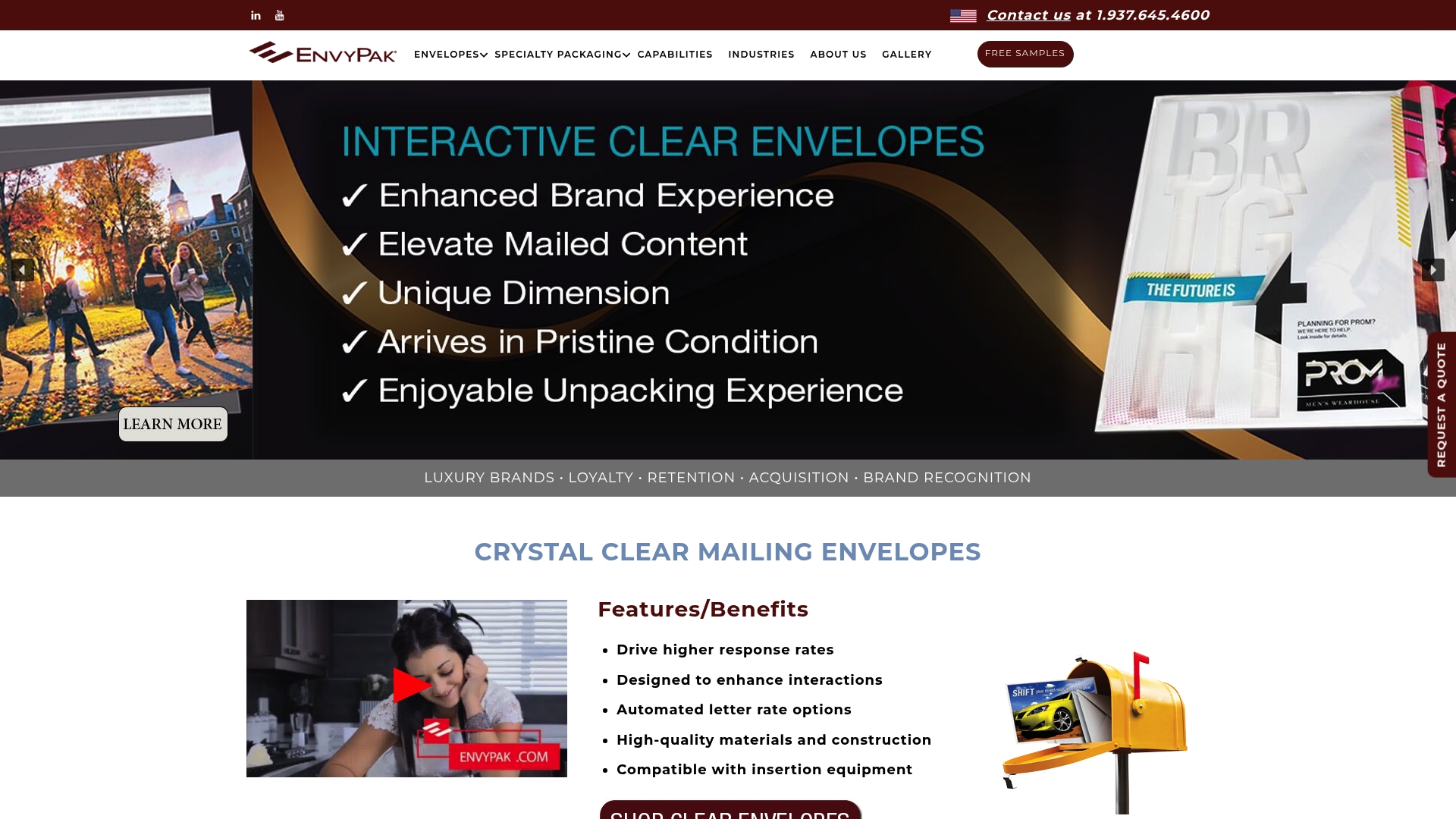
The physical quality of your outer packaging sets the tone before a recipient reads a single word. Envypak’s crystal clear envelopes put your creative mail piece on display the moment it lands in the mailbox, removing the guesswork about whether the piece inside is worth opening. For campaigns that require fully customized formats, Envypak’s custom envelopes and mailers are built to support direct marketing specifications, including automation compatibility and eco-friendly materials. Whether you are running a high-volume acquisition campaign or a precision B2B outreach, Envypak’s product range gives your creative work the physical presentation it deserves.
FAQ
What is a creative mail piece in direct marketing?
A creative mail piece is a physical direct response item that uses unconventional formats, tactile materials, personalization, and digital triggers to capture attention and drive measurable action. It differs from standard mail by prioritizing response mechanics over generic brand awareness.
What makes a mail piece effective at generating responses?
Effective mail pieces combine a benefit-led headline readable in under two seconds, a single clear offer with an expiration date, and a CTA set at 18 to 24 points. Every element must be capable of converting independently since recipients do not always read in sequence.
How do QR codes and NFC tags improve creative mail campaigns?
Dynamic QR codes track individual scan events and redirect to personalized landing pages, while NFC tags allow instant smartphone tap-to-checkout interactions. Both reduce friction in the transition from physical mail to digital conversion, which directly improves response rates.
What response rates can creative mail pieces achieve?
Dimensional and lumpy mail formats achieve response rates between 5% and 15%, compared to fractions of a percent for most digital channels. Pattern interruption tactics like unique shapes and heavy paper can boost response rates by 135% over standard mail formats.
How should marketers measure creative mail campaign success?
Track response rate, unique website visits via dedicated URLs or QR scans, conversion rate, and cost per acquisition per campaign version. A/B test one variable at a time, and coordinate mail arrival timing with digital retargeting to reinforce the message across channels.