

History of Envelopes: From Ancient Clay to Modern Mail
History of Envelopes: From Ancient Clay to Modern Mail
In our digital age, the humble envelope might seem like simple packaging, yet the history of envelopes tells a surprisingly rich story of privacy, technology, and global communication. Every time you seal a letter, you participate in a tradition stretching back thousands of years. The question “Who invented the envelope?” doesn’t have a single answer—its form has evolved dramatically across centuries and civilizations. From protective clay casings in ancient Mesopotamia to the recognizable paper product that emerged in the 1800s, the history of envelopes reveals humanity’s enduring need to send secure, private messages. Let’s explore the remarkable journey of how this essential communication tool came to be.
The Ancient Origins of Protection: What Was in the Envelopes?
Long before paper was widely available, ancient civilizations developed clever ways to protect important information. The earliest “proto-envelopes” served a crucial security function.
Clay Wrappers in Mesopotamia (c. 2000 B.C. – The First Envelopes)
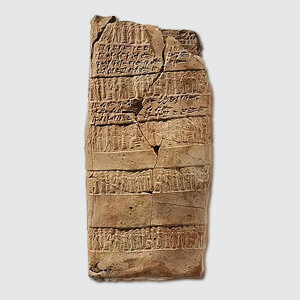
The earliest examples of a protective wrapper came from ancient Babylon and Sumeria around 2000 B.C. Here, documents were inscribed on soft clay tablets using cuneiform script. To ensure privacy and prevent tampering, the message was often encased in an outer layer of clay.
What was in the envelopes? Economic documents, financial accounts, deeds, and letters etched onto inner clay tablets.
How were they opened? The recipient had to literally break the outer clay “envelope” to access the tablet, making it immediately obvious if the message had been intercepted.
The First Paper Envelopes in Ancient China
The development of paper in China radically changed the envelope origin. Around 200 B.C., the Chinese created the first coverings made from paper. However, these were not initially used for correspondence. Instead, they were often used to deliver monetary gifts to government officials or relatives. While the Chinese can be credited with the first paper iteration, the design was rudimentary, often hand-folded.
The Medieval Era and the Rise of Secrecy – The Evolution of Paper Envelopes
For many centuries after the invention of paper, letters were often just folded and sealed using intricate methods known as “letter-locking.” A separate envelope was an extravagance.
Wax Seals and Aristocratic Use – Early Postal Envelopes
During the Middle Ages, when a separate cover was used, it was typically an extra sheet of paper folded around the letter and secured with a wax seal. This seal, often bearing a coat of arms or unique symbol, was the true mark of authenticity and guaranteed the message’s secrecy. Only the wealthy aristocracy and members of the church could generally afford this extra layer of security, as postage costs were calculated per sheet of paper.
 The Early 1800s Envelope: From Luxury to Necessity – The Modern Envelope’s Birth
The shift toward the standardized envelope we recognize today began in the 19th century. In 1820,
British paper merchant K.S. Brewer from Brighton is often credited with selling the first commercially available, pre-cut envelopes. He painstakingly cut each one by hand using a template. This marked a major step, providing a uniform container for letters.
The Industrial Revolution: Who Really Invented Envelopes for the Masses?
The true democratization of the envelope came not from a single inventor, but from a series of 19th-century innovations that made mass production possible and postage affordable.
Post Office Reform and Standardization
In 1837, Sir Rowland Hill’s postal reforms in Great Britain introduced the concept of the prepaid “penny wrapper” and the adhesive postage stamp. This meant the cost of mailing a letter was based on weight, not the number of sheets, making a separate cover much more economical. This surge in demand for affordable envelopes meant that the traditional hand-folding could no longer keep up.
The Envelope-Making Machine
The person who invented the automated process that created the modern envelope was British inventor Edwin Hill (assisted by Warren De La Rue). In 1845, they patented the first steam-powered machine capable of cutting, creasing, and folding envelope blanks into shape. This breakthrough launched the era of mass-produced 1800s envelopes, making this protective covering accessible to everyone, not just the elite.
Later inventions, such as the automatic machine by Russel Hawes in America (1853) and machinery that applied sticky gum to the flap (1876), perfected the design, cementing the envelope’s place in history.
The Legacy of the Humble Envelope
From a baked clay shell to a standardized paper product, the history of envelopes is a powerful narrative of how technology and changing social needs drive innovation. While the ancient Babylonians perfected security through destruction and the Chinese created the first paper versions, it was the rapid mechanization of the 1800s—spearheaded by men like K.S. Brewer and Edwin Hill—that brought the modern envelope to the public. Today, every letter you send, and every package you receive, continues the legacy of this essential, timeless tool for secure communication.