

Direct Mail Engagement Tactics 2026: What Works Now

Direct mail engagement tactics in 2026 are defined by one principle: physical mail works best when it connects directly to a digital action. 84% of marketers now report direct mail as their highest ROI channel, and 95% plan to maintain or increase their investment. That performance is not accidental. The best campaigns in 2026 use the Direct Mail Engagement Model, a three-stage framework covering readership, consideration, and commitment, to guide recipients from opening an envelope to taking action. Marketers who understand this model, and pair it with predictive targeting and digital integration, consistently outperform those running mail in isolation.
1. What are the top direct mail engagement tactics in 2026?
The most effective 2026 direct mail strategies share a common structure: personalization at the content level, digital triggers embedded in the piece, and a follow-up plan locked in before the first envelope drops.
Variable data printing for true personalization
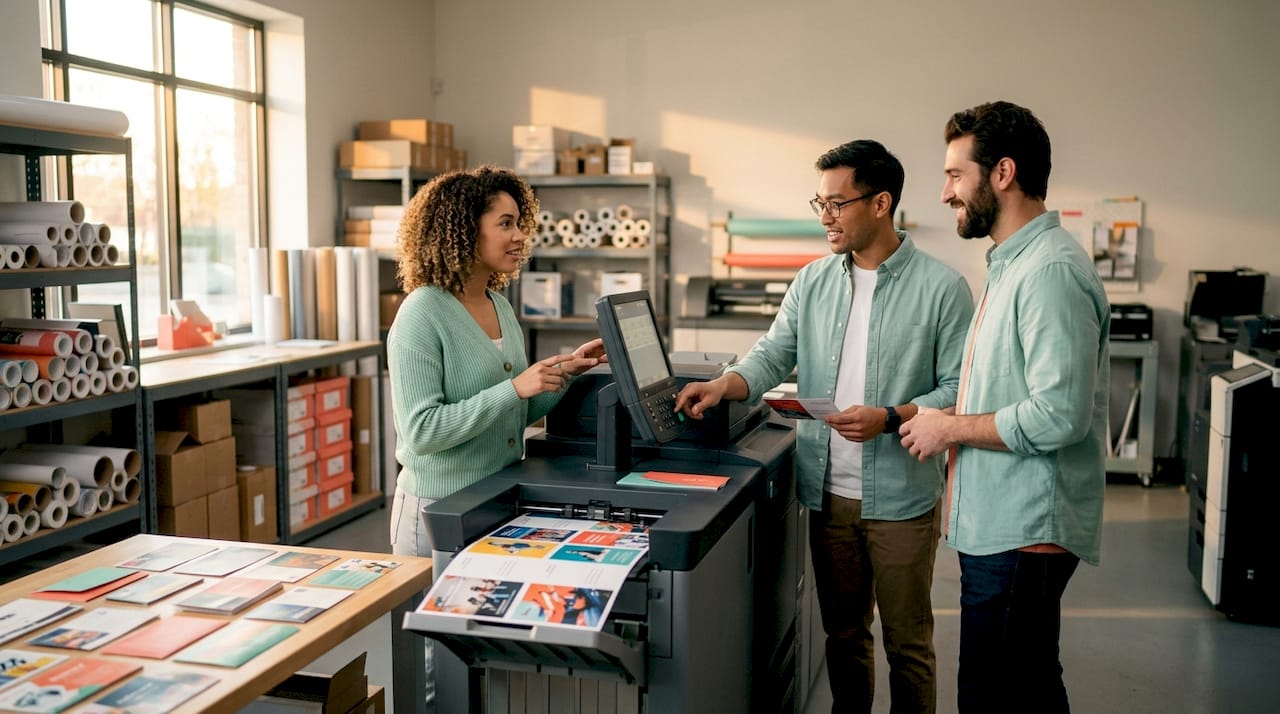
Variable data printing goes far beyond inserting a recipient’s first name. Behavioral data now drives entire content section swaps, so a homeowner in Phoenix sees different imagery, offers, and copy than a renter in Chicago receiving the same campaign. This level of personalization requires clean, segmented data, but the response rate lift justifies the setup cost.
Digital triggers: QR codes, PURLs, and NFC tags
Every mail piece in 2026 needs at least one digital entry point. QR codes enable instant mobile checkout or landing page access. Personalized URLs, known as PURLs, extend the personalization from the mail piece into the web experience. NFC tags go further, allowing a tap from a smartphone to launch a video, form, or product page. These tools also create trackable attribution, so you know exactly which piece drove which action.
Predictive modeling for audience targeting
Predictive modeling now combines behavioral “what” data with motivational “why” data. A customer who bought running shoes three times is behavioral data. Understanding that they buy before a race season is motivational data. Combining both lets you mail at the right moment with the right message, not just to the right person.
Tactile and dimensional mail formats
Dimensional mail, sometimes called “lumpy mail,” creates a physical experience that flat envelopes cannot replicate. A box, a tube, or an oversized mailer signals importance before the recipient even opens it. Handwritten fonts and premium paper stocks add authenticity. Augmented reality inserts take this further by letting recipients point a phone at the mail piece to trigger an interactive experience.
Multi-touch follow-up sequences
A single mail piece rarely closes a sale. Top campaigns run retargeting digital ads for 14–30 days after mail delivery to reinforce the message across social and display channels. Email and phone follow-ups, timed to arrive after the mail piece lands, compound the physical credibility of the mailer with digital convenience.
Pro Tip: Map your follow-up sequence on a calendar before you print a single piece. If you cannot commit to the email, phone, and ad retargeting schedule, reduce your mail volume and do fewer recipients properly rather than mailing broadly with no follow-through.
2. How does integrating digital components boost direct mail engagement?
Physical mail and digital channels are not competing tactics. They are multipliers. Campaigns combining mail with digital follow-up see response rate lifts up to 118% compared to mail alone. That number reflects what happens when a recipient sees your brand in their mailbox, then again in their social feed, then again in their inbox.
57% of recipients visit a brand’s website after receiving a physical mail piece. That statistic means more than half your mailing list is already primed to engage digitally. The gap between receiving mail and visiting a website is where QR codes and PURLs eliminate friction.
Here is how each digital component functions in a fully integrated campaign:
- QR codes link directly to mobile-optimized landing pages, checkout flows, or video content. They also generate scan data, giving you delivery confirmation and engagement timestamps.
- PURLs carry the recipient’s name and profile into the web experience, so the landing page they reach feels as personalized as the mail piece they just read.
- Augmented reality inserts let recipients interact with 3D product demos or branded experiences using only their phone camera. This format works especially well for product launches and real estate.
- NFC tags require no scanning. A tap launches the digital experience instantly, reducing the steps between physical interest and digital action.
- Retargeting overlays on platforms like Meta and Google Display Network keep your brand visible for the 14–30 days after mail delivery, reinforcing the message without requiring the recipient to act immediately.
| Digital component | Primary function | Measurable output |
|---|---|---|
| QR code | Mobile landing page access | Scan rate, page visits |
| PURL | Personalized web experience | Session data, form fills |
| NFC tag | Instant digital trigger | Tap rate, conversion events |
| Augmented reality | Interactive product experience | Engagement time, shares |
| Retargeting ads | Post-mail brand reinforcement | Click-through rate, conversions |
You can track all of these through direct mail metrics that connect physical delivery to digital behavior, giving you a complete picture of campaign performance.
3. Why a follow-up plan is critical before you mail anything
The single most common reason direct mail campaigns fail is not poor design or weak copy. It is the absence of a follow-up plan. Successful campaigns finalize their email, phone, and digital ad sequences before the first piece goes to print. Without that structure, the mail piece lands and the momentum dies.
Think of direct mail as the opening line of a sales conversation. The physical piece earns attention and credibility. The follow-up sequence converts that attention into a decision. A well-timed email arriving two days after the mail piece references what the recipient received and adds a reason to act now. A phone call on day five, for B2B campaigns, reaches a prospect who already knows your name.
- Lock in your follow-up calendar before printing. Every channel, email, phone, and digital ad, needs a scheduled send date tied to your estimated delivery window.
- Segment your follow-up by recipient behavior. Recipients who scanned the QR code get a different email than those who did not open the digital component at all.
- For B2B campaigns, secure direct decision-maker contacts. Mailing to a company address without a named contact means your piece may never reach the person who can act on it.
- Avoid mailing large, generic lists without follow-up capacity. A smaller, well-followed list consistently outperforms a broad, unmanaged one.
- Match your follow-up tone to the mail piece. If the mailer was warm and personal, a cold, formal email follow-up breaks the experience.
Pro Tip: Treat your follow-up sequence like a multi-channel engagement plan, not an afterthought. The mail piece is the anchor. The follow-up is where the conversion actually happens.
4. What creative direct mail design best practices drive engagement?
The Direct Mail Engagement Model identifies three stages where recipients drop off: readership, consideration, and commitment. Good design reduces attrition at each stage. Poor design, or an unclear offer, causes preventable customer loss before the recipient ever reaches your call to action.
Readership stage: the envelope is the first ad
The envelope or outer packaging determines whether the piece gets opened. A clear window envelope showing a personalized offer inside creates immediate curiosity. Teaser copy on the outer envelope, kept to one strong line, sets the expectation without giving everything away. Envypak’s crystal clear mailers solve this problem directly: the recipient sees the content before opening, which removes the “is this worth my time?” hesitation entirely.
Consideration stage: copy that earns attention
Once the piece is open, benefit-led copy keeps the reader moving. Lead with what the recipient gains, not what you offer. Avoid dense paragraphs. Use short sentences, subheadings, and white space to make the piece scannable. Handwritten font elements in signatures or callout boxes add a human touch that printed body copy cannot replicate.
Commitment stage: a clear, credible call to action
The call to action must do three things: tell the recipient exactly what to do, explain why they should do it now, and make the action feel low-risk. A deadline, a limited quantity, or a specific bonus tied to response creates urgency without feeling manipulative. One call to action per piece outperforms multiple competing options every time.
| Design element | Weak execution | Strong execution |
|---|---|---|
| Envelope | Plain white, no teaser | Clear window or bold teaser line |
| Headline | Company name and logo | Recipient benefit in one line |
| Body copy | Dense paragraphs, multiple offers | Short sections, single focused offer |
| Call to action | “Contact us for more info” | “Scan to claim your offer by [date]” |
| Materials | Standard paper stock | Premium or textured stock with handwritten elements |
For deeper guidance on direct mail design, the principles above apply whether you are mailing postcards, self-mailers, or dimensional packages.
5. How to segment and cleanse direct mail lists in 2026
List quality determines campaign quality. A perfectly designed mail piece sent to outdated or poorly segmented addresses wastes production budget, postage, and follow-up capacity. NCOA processing before every mail drop is the baseline standard. NCOA, the National Change of Address database, updates addresses for recipients who have moved, preventing undeliverable mail and wasted postage.
Beyond NCOA, effective segmentation separates high-intent recipients from low-probability contacts. Behavioral segmentation groups recipients by past purchase behavior, website visits, or event attendance. Demographic segmentation adds layers like geography, income range, or industry. Motivational segmentation, the newest layer, uses predictive data to identify recipients who are in an active buying cycle right now.
- Run NCOA processing before every single drop, not just annually. Address data degrades faster than most marketers expect.
- Segment B2B lists by named decision-maker contacts, not just company addresses. Gatekeepers filter generic mail before it reaches the right person.
- Build suppression lists to exclude recent buyers, current customers, and opted-out contacts from acquisition campaigns.
- Score your list by engagement history. Recipients who responded to a previous campaign deserve a different message and offer than cold contacts.
- Audit list sources regularly. Purchased lists degrade faster than house lists built from direct customer interactions.
A clean, well-segmented list is the foundation of every high-performing campaign. You can measure the impact of list quality directly through direct mail ROI tracking tools that connect delivery rates to conversion outcomes.
Key takeaways
Direct mail in 2026 delivers its highest ROI when physical personalization, digital integration, and a structured follow-up plan operate together as a single system.
| Point | Details |
|---|---|
| Follow-up plan comes first | Finalize email, phone, and ad sequences before printing the first piece. |
| Digital triggers are required | QR codes, PURLs, and NFC tags connect physical mail to measurable digital actions. |
| List hygiene is non-negotiable | Run NCOA processing before every drop to eliminate wasted postage and undeliverable mail. |
| Design guides the engagement model | Reduce drop-off at readership, consideration, and commitment stages through intentional design. |
| Predictive targeting outperforms reactive | Combine behavioral and motivational data to mail at the right moment, not just to the right person. |
What I have learned about direct mail after years of watching campaigns succeed and fail
The campaigns I have seen fail most often share one trait: the marketer treated the mail piece as the entire campaign. They spent weeks on design, obsessed over paper stock, and then mailed to 10,000 addresses with no follow-up plan and no digital integration. The piece was beautiful. The results were flat.
The campaigns that consistently performed had something less glamorous in common: a calendar. Every follow-up email was written before the mail dropped. Every retargeting audience was built before the first piece printed. The mail piece was the opening move, not the whole game.
Predictive targeting is where I see the biggest gap between what marketers say they do and what they actually do. Most teams still pull lists based on past purchase history and call it targeting. Real predictive modeling asks why a customer bought, not just when. That shift from reactive to predictive is the single biggest lever available to direct mail marketers right now, and most are not pulling it.
The Engagement Model matters more than most marketers realize. Losing a recipient at the readership stage because the envelope looked like junk mail is a complete waste. Losing them at the consideration stage because the copy was too dense is equally preventable. Design is not decoration. It is the mechanism that moves people from one stage to the next.
My honest view: direct mail is not competing with digital. It is the physical anchor that makes digital follow-up credible. A cold email is easy to ignore. An email that references a mail piece the recipient is holding is a different conversation entirely.
Envypak’s role in your direct mail campaign results
The envelope is the first thing a recipient sees. It determines whether the piece gets opened or discarded. Envypak’s crystal clear mailers solve the readership problem at the source: when recipients can see the personalized content inside before opening, the hesitation disappears.
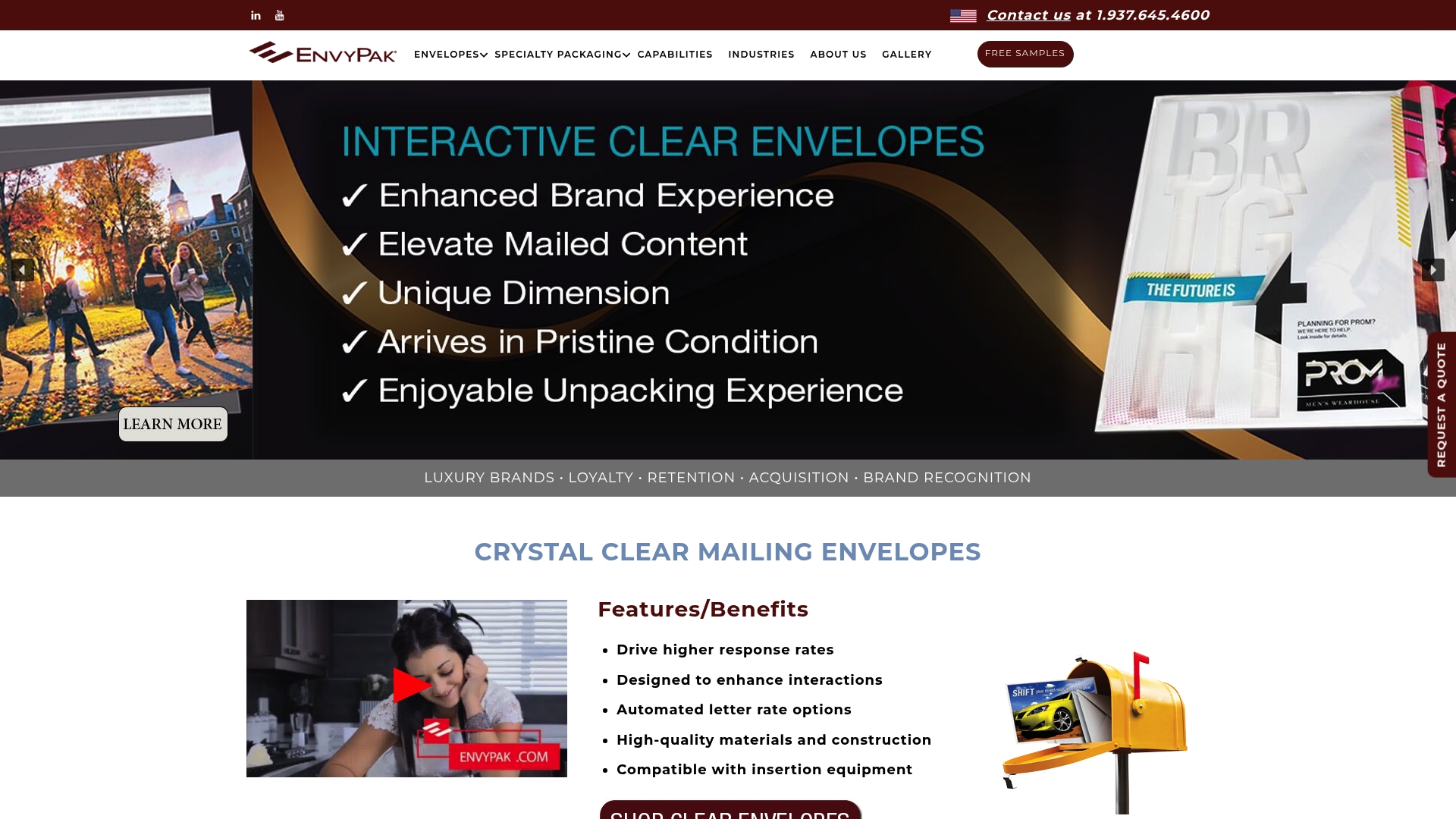
Envypak’s automation-compatible envelopes work with high-volume mail production without sacrificing the visual impact that drives open rates. For campaigns that need a premium physical experience, custom envelopes and mailers let you match the packaging to the offer. For campaigns where product visibility is the message, clear packaging solutions make the content the first impression. Choosing the right envelope size for your format is one of the fastest ways to improve open rates without changing a word of your copy.
FAQ
What is the highest ROI direct mail tactic in 2026?
Combining personalized mail with a structured digital follow-up sequence delivers the strongest results. Campaigns that integrate mail with digital channels see response rate lifts up to 118% compared to mail alone.
How does NCOA processing improve direct mail performance?
NCOA processing updates recipient addresses against the National Change of Address database before each mail drop. This reduces undeliverable mail, cuts wasted postage, and improves overall delivery accuracy.
What digital elements should every mail piece include?
Every mail piece should include at least one digital trigger, either a QR code, a PURL, or an NFC tag. These tools connect physical mail to trackable digital actions and reduce friction between receiving a piece and taking the next step.
How long should retargeting ads run after a mail drop?
Top campaigns run retargeting digital ads for 14–30 days after mail delivery. This window keeps the brand visible while recipients move through their decision process at their own pace.
What is the Direct Mail Engagement Model?
The Direct Mail Engagement Model is a three-stage framework covering readership, consideration, and commitment. Campaign design and copy must reduce drop-off at each stage to move recipients from opening the envelope to taking the desired action.