

What Is a Multi-Touch Mail Campaign? A 2026 Guide

A multi-touch mail campaign is a coordinated series of mail pieces sent to the same audience multiple times over weeks or months to build brand recognition, generate qualified leads, and move prospects toward a purchase. The industry term for this approach is “multi-touch direct mail,” and it sits at the center of modern multi-touch marketing strategy for good reason. A single mailing rarely converts. Repeated, well-timed contact does. Marketing professionals and business owners who commit to this method consistently outperform those who treat direct mail as a one-shot tactic.
What is a multi-touch mail campaign and how does it work?
A multi-touch direct mail campaign involves sending multiple distinct mail pieces to the same audience to reinforce messaging and maximize ROI. Each piece serves a different purpose: the first builds awareness, the second deepens recognition, and the third drives action. This sequenced approach mirrors how buyers actually make decisions, which is rarely in one sitting.
The psychology behind this is straightforward. Repeated exposure builds familiarity, and familiarity builds trust. A prospect who sees your brand three times over six weeks is far more likely to respond than one who received a single postcard in january and never heard from you again.
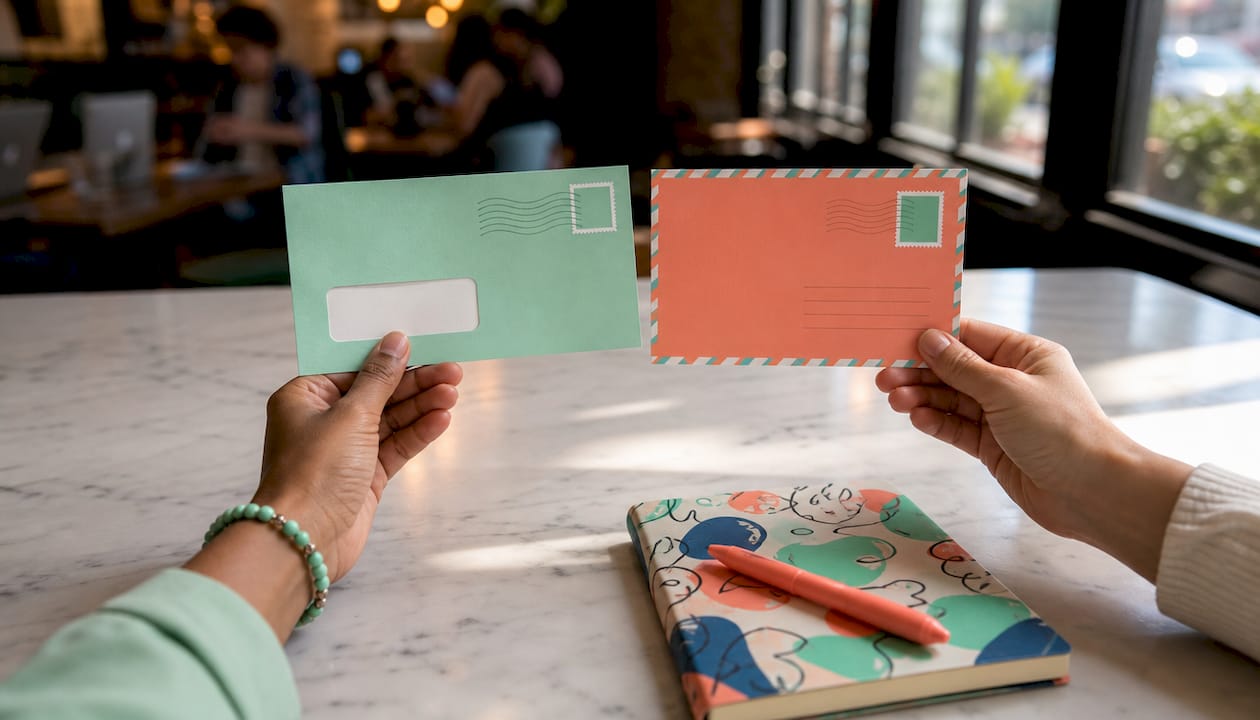
Multi-touch campaigns differ from traditional “batch and blast” mailings in one critical way: every piece is planned as part of a sequence, not as a standalone event. Each touchpoint has a defined role, a defined message, and a defined place in the buyer journey. That structure is what separates a campaign from a mailing.
Why does frequency matter more than a single mailing?
Single-touch mailings often fail to produce measurable ROI. A single touch is a data point, not a campaign. Without repetition, you cannot tell whether your offer was weak, your list was wrong, or your timing was off.
The benefits of multi-touch campaigns over single mailings are concrete:
- Higher response rates. Most campaign responses occur on the second or third touchpoint, not the first.
- Better attribution. Multiple touches let you see which message or timing drove action.
- Stronger brand recall. Repeated exposure keeps your brand top of mind during longer buying cycles.
- Lower cost per acquisition. Spreading contact across three pieces often costs less per conversion than running three separate one-off campaigns.
- Audience qualification. Prospects who respond after multiple touches tend to be more serious buyers.
Standard practice is to plan 2–3 touches spaced 3–4 weeks apart. That spacing gives prospects time to act without letting your brand go cold between contacts.
Pro Tip: Budget for at least three mail pieces before you evaluate results. Pulling the plug after one mailing is the most common reason direct mail gets written off unfairly.
How does integrating digital channels amplify mail campaigns?
Direct mail alone is powerful. Direct mail paired with digital channels is measurably more powerful. Businesses using three or more marketing channels in integrated strategies see a 287% higher purchase rate and 89% better customer retention compared to single-channel businesses. Those numbers reflect what happens when physical and digital touchpoints reinforce each other.
A typical integrated sequence looks like this:
- Week 1: Send a branded direct mail piece introducing your offer or service.
- Week 2: Follow up with a targeted email referencing the mailer the prospect received.
- Week 3: Run retargeting ads on social media platforms to prospects on your mailing list.
- Week 4: Send a second mail piece with a stronger offer or deadline.
- Week 6: Close with a final mail piece or phone follow-up for high-value prospects.
Each channel plays a specific role. Direct mail builds physical presence and brand recall. Email reinforces the message with speed and low cost. Social retargeting keeps your brand visible between mailings. Together, they create a surround-sound effect that no single channel can replicate.
The table below shows how each channel contributes at different stages of the buyer journey.
| Channel | Primary role | Best stage |
|---|---|---|
| Direct mail | Brand introduction and credibility | Awareness |
| Message reinforcement and follow-up | Consideration | |
| Social retargeting | Visibility between physical touches | Consideration |
| Search ads | Capture intent after mail exposure | Decision |
| Phone or SMS | High-value prospect conversion | Decision |
For a deeper look at coordinating mail and digital outreach, the timing and sequencing decisions matter as much as the channels themselves. Explore multichannel marketing tools for SMBs if you are building this infrastructure for the first time.
How to create a multi-touch mail campaign step by step
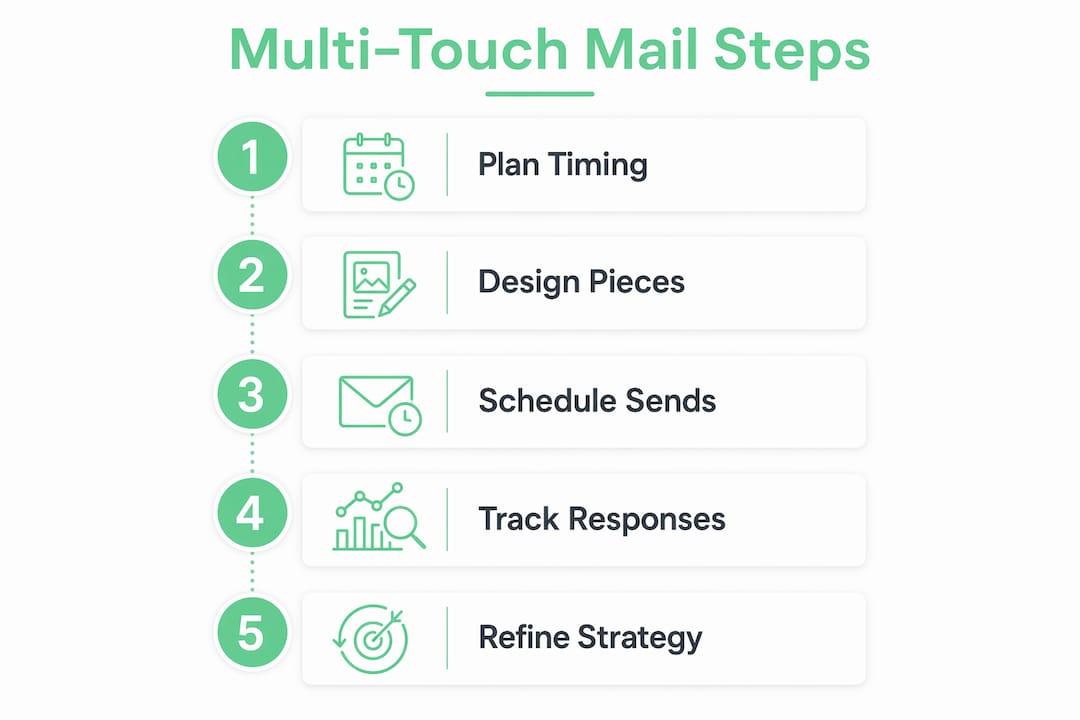
Building an effective campaign requires planning before printing. Here is the process that produces consistent results.
-
Define your audience and clean your list. List quality determines everything. A well-targeted list of 2,000 prospects outperforms a generic list of 20,000. Segment by geography, industry, purchase history, or behavior before you write a single word of copy.
-
Assign a purpose to each mail piece. Piece one introduces your brand and establishes credibility. Piece two educates the prospect on your offer or differentiator. Piece three creates urgency with a specific offer, deadline, or call to action. Properly coordinated campaigns segment messaging by touchpoint purpose rather than repeating the same message three times.
-
Set your timing and frequency. Plan 2–3 touches spaced 3–4 weeks apart as your baseline. Adjust based on your sales cycle. A high-ticket B2B offer may need a longer sequence. A seasonal retail promotion may compress to two weeks between touches.
-
Design for the channel. Each mail piece needs a clear headline, a single call to action, and a way to respond. QR codes, personalized URLs, and phone numbers all work. Pick one primary response method per piece so you can track which touch drove the action.
-
Track and measure by touchpoint. Use unique codes, URLs, or phone numbers per mailing to attribute responses accurately. Multi-touch attribution reveals which channels and which touches contribute at different funnel stages. Without tracking, you are flying blind on your next campaign.
Pro Tip: Use campaign timing strategy data from your first campaign to refine spacing on your second. The second campaign almost always outperforms the first because you know which touch drove the most responses.
What are the most common mistakes in multi-touch mail campaigns?
Most campaigns underperform for predictable reasons. Knowing these pitfalls in advance saves budget and time.
- Stopping after one mailing. The majority of responses come from the second or third touch. Marketers who quit after one piece never see the return they paid for.
- Repeating the same message. Sending the same postcard three times is not a campaign. Each piece must offer new information, a new angle, or a stronger reason to act.
- Weak or vague offers. “Call us for more information” is not an offer. A specific discount, a free consultation, or a deadline-driven incentive gives prospects a reason to respond now.
- Ignoring list hygiene. Mailing to outdated or unqualified addresses wastes budget on every touch. Refresh your list before each campaign cycle.
- Skipping digital reinforcement. Physical mail works harder when digital channels echo the same message. A campaign that lives only in the mailbox misses the amplification effect of multi-channel presence.
- Prioritizing reach over frequency. Mailing to 10,000 people once produces weaker results than mailing to 3,000 people three times. Frequency drives conversion. Reach drives awareness.
A focused multi-touch campaign balances frequency and relevance to avoid audience fatigue while keeping engagement high. The goal is to feel persistent without feeling intrusive. That balance comes from varying your message and matching your offer to where the prospect is in the buying cycle.
Key Takeaways
Multi-touch mail campaigns outperform single mailings because repeated, sequenced contact builds the trust and familiarity that converts prospects into buyers.
| Point | Details |
|---|---|
| Frequency drives results | Most responses come from the second or third touch, not the first mailing. |
| Sequence your messaging | Each mail piece should serve a distinct role: awareness, education, or conversion. |
| Integrate digital channels | Businesses using three or more channels see a 287% higher purchase rate. |
| Track by touchpoint | Use unique codes or URLs per piece to identify which touch drives responses. |
| Budget for three touches | Evaluate campaign performance only after completing a full multi-touch sequence. |
Why the second mailing is where the money is
I have reviewed enough direct mail campaigns to say this with confidence: the first mailing almost never tells you the full story. Marketers pull the plug too early, declare direct mail “dead,” and move budget to digital. Then they wonder why their digital-only campaigns plateau.
The second and third touches are where buyer behavior actually shows up. A prospect who ignored your first postcard in march may have been in the wrong stage of their buying cycle. By the time your second piece arrives in april, they are actively comparing options. Your brand is already familiar. That familiarity is the entire point of the sequence.
What I have also seen is that the physical nature of direct mail gives it staying power that digital channels cannot replicate. A well-designed mail piece sits on a desk. It gets picked up twice. It gets shown to a colleague. An email gets deleted in three seconds. That physical presence is why direct mail response rates consistently outperform email on a per-piece basis, even when email wins on volume and speed.
The marketers who get the best results treat direct mail as the anchor of their multi-touch strategy, not an afterthought. They plan the full sequence before the first piece goes to print, and they resist the urge to change course after one mailing. Patience and persistence are the actual competitive advantages here.
— James
How Envypak’s clear envelopes give your campaign an edge
Physical mail only works if it gets opened. Envypak’s crystal clear mailing envelopes solve the first and most critical barrier in any multi-touch campaign: getting the prospect to look inside.
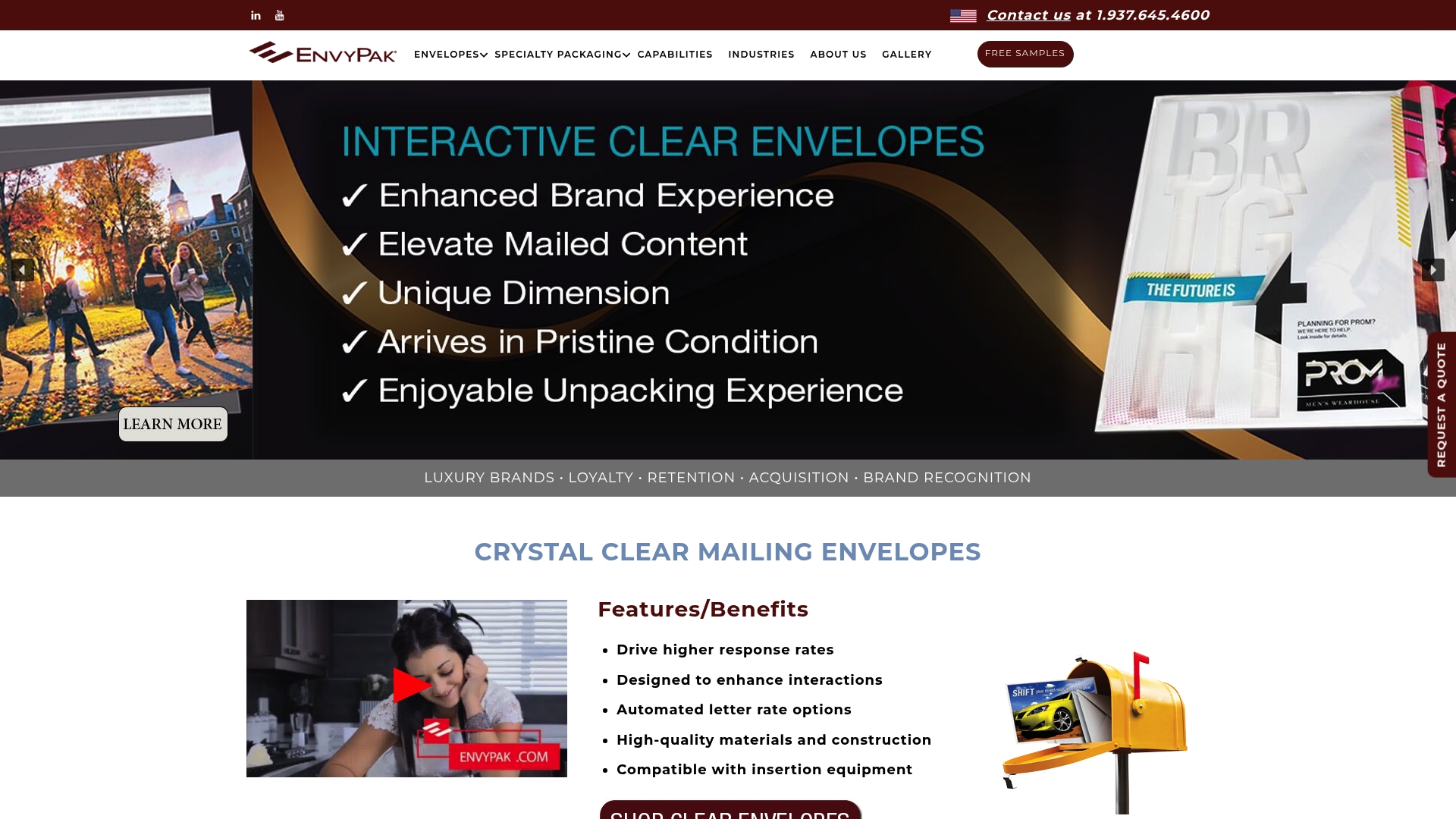
When your mail piece is visible through the envelope before it is even opened, curiosity does the work for you. Envypak’s clear envelopes are automation-compatible, eco-friendly, and designed to increase open rates for exactly this reason. Whether you are running a three-touch acquisition sequence or a retention campaign for existing customers, the envelope is your first impression. Make it count with a format that stands out in any mailbox. See the full range of direct mail envelope options to find the right fit for your next campaign.
FAQ
What is a multi-touch mail campaign?
A multi-touch mail campaign is a series of distinct mail pieces sent to the same audience over weeks or months to build brand recognition and drive conversions. Each piece serves a specific role in moving the prospect from awareness to action.
How many touches does a direct mail campaign need?
The standard practice is 2–3 touches spaced 3–4 weeks apart, with most responses occurring on the second or third mailing. Fewer than two touches rarely produces enough data to evaluate campaign effectiveness.
How does a multi-touch mail campaign differ from a single mailing?
A single mailing is one data point. A multi-touch campaign is a sequenced strategy where each contact builds on the last, increasing familiarity and trust with each touch.
Should direct mail be combined with digital channels?
Businesses using three or more channels in integrated campaigns see a 287% higher purchase rate than single-channel businesses. Pairing direct mail with email and social retargeting amplifies results significantly.
How do I measure which touch in my campaign drove results?
Use unique QR codes, personalized URLs, or dedicated phone numbers for each mail piece. Multi-touch attribution tracks which touchpoints contribute at each stage of the funnel, giving you clear data for your next campaign.