

What Is a Direct Mail Insert? A Marketer’s Guide

A direct mail insert is a printed piece placed inside a mailed package, such as an envelope or shipper, to deliver a targeted promotional or informational message alongside the primary mailpiece. Unlike a postcard or self-mailer that travels on its own, an insert rides inside a larger package and speaks directly to a recipient who has already opened the outer piece. Marketers use inserts to add a second layer of communication without sending a separate mailing. Common formats include brochures, flyers, coupon cards, reply cards, and instruction sheets. Understanding what a direct mail insert is, and how to use one well, separates campaigns that generate responses from campaigns that generate recycling.
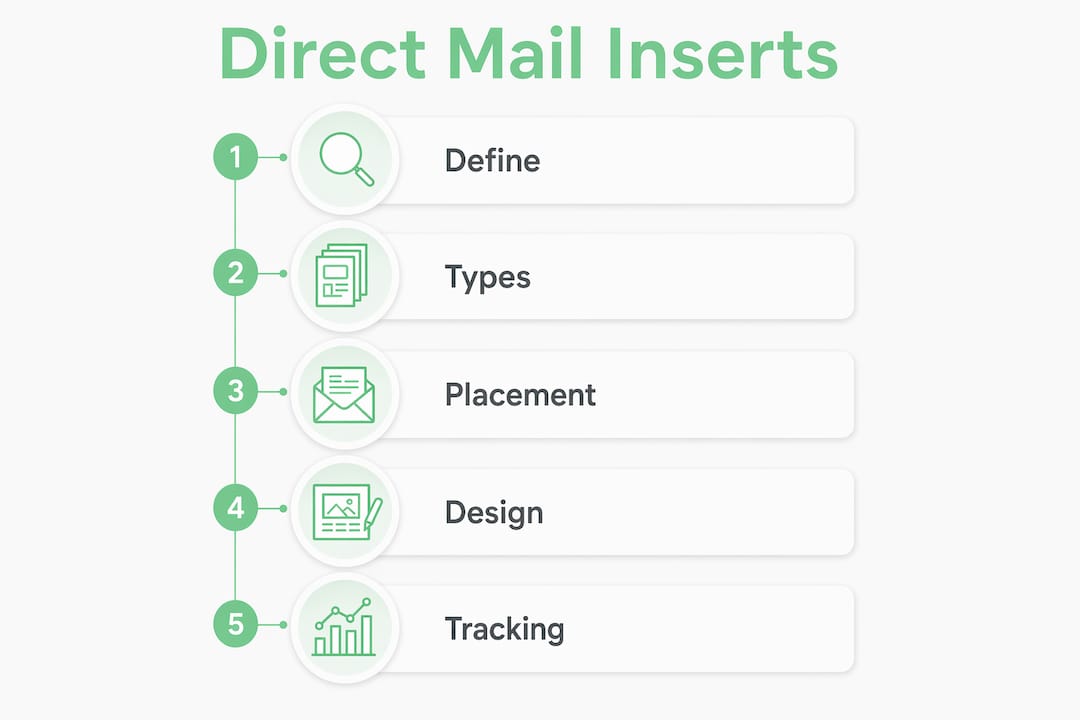
What is a direct mail insert and how does it work?
A direct mail insert is an additional printed piece placed inside a larger mailed package to deliver specific messages or calls to action. The insert does not travel alone. It depends on the outer envelope or package to reach the recipient, which means it benefits from the credibility and attention the outer piece already earns.
The most common home for an insert is a letter pack. A letter pack typically combines a personalized letter, a brochure or flyer, a buck slip, and a reply envelope, creating a sophisticated mail package that guides the recipient toward a response. Each component plays a role. The letter builds the case. The insert reinforces the offer or provides supporting detail. The reply card or envelope makes the next step easy.

Inserts are not limited to letter packs. Retailers include them in shipping boxes. Banks tuck them into statement envelopes. Nonprofits add them to membership renewal packages. The format is flexible. The goal is always the same: deliver a focused message to someone who is already holding your mail.
What types of direct mail inserts are there?
The most common insert types fall into two broad categories: informational and promotional. Informational inserts reduce confusion and educate the recipient. Promotional inserts drive a specific next step. Most effective campaigns use both within a single package, but each insert piece should serve only one purpose.
Common insert types and their primary functions:
- Brochure: Provides detailed product or service information, ideal for complex offers that need more explanation than a letter can deliver.
- Flyer: A single sheet focused on one offer, event, or announcement. Works best when the message is simple and the CTA is clear.
- Coupon card: Drives immediate purchase behavior with a discount or offer code. Works well for retail, subscription, and e-commerce brands.
- Reply card: Captures lead information or confirms a response. Often paired with a reply envelope to reduce friction.
- Instruction sheet: Educates the recipient on how to use a product or complete a process. Common in financial services, healthcare, and software.
- Buck slip: A small, narrow slip that highlights a single key message or deadline. Often the first thing a recipient reads after opening.
The biggest mistake marketers make is cramming multiple messages onto one insert. Strong insert programs balance education and promotion without overwhelming the reader, combining instructions with a single CTA. One insert, one job.
Pro Tip: If you need to include both informational and promotional content, use two separate inserts rather than one cluttered piece. A brochure handles the education. A coupon card handles the conversion. Each piece stays clean and scannable.
How do direct mail inserts compare to standalone mailers?
Direct mail formats include letters, postcards, catalogs, and self-mailers, and inserts are additional components inside those formats rather than standalone pieces. That distinction matters for production planning, cost, and campaign strategy.
A postcard travels without an envelope. It is visible the moment it leaves the mail carrier’s hand, which makes it fast and cheap to produce. A self-mailer is a folded piece that seals itself, also requiring no envelope. Both formats are simple to produce and mail. Neither can carry an insert.
Letter packs and dimensional mailers are different. They use an outer envelope, which creates space for multiple enclosures. That space is where inserts live. The tradeoff is production complexity. Insertion steps add manual or machine steps that increase lead times and costs compared to standalone mail formats. A postcard goes straight from printer to mail stream. A letter pack requires collating, inserting, sealing, and sometimes hand assembly.
| Format | Envelope required | Insert capacity | Production complexity | Typical cost driver |
|---|---|---|---|---|
| Postcard | No | None | Low | Print and postage only |
| Self-mailer | No | None | Low | Print, fold, and postage |
| Letter pack | Yes | Multiple inserts | Medium to high | Print, insert, and labor |
| Dimensional mailer | Yes | Multiple inserts | High | Custom packaging and labor |
| Catalog | No | Limited | Medium | Print volume and postage weight |
The right format depends on the campaign goal. If speed and low cost matter most, a postcard wins. If the offer is complex and the audience is high value, a letter pack with supporting inserts delivers more persuasive power. Inserts add layering and depth that standalone formats cannot replicate.
What do direct mail inserts cost to produce?
Insert cards typically cost between $0.03 and $0.12 per unit depending on stock, finish, and volume. That range is wide because the variables are significant. A simple one-color flyer on uncoated stock sits at the low end. A multi-panel brochure with gloss coating and spot UV sits well above it.
The factors that move the needle on insert cost fall into three areas: materials, production steps, and volume. Specialty stocks like heavy card stock, textured paper, or synthetic materials raise the per-unit price. Multi-panel designs require additional folding steps. Low print volumes eliminate the economies of scale that bring unit costs down on larger runs.
| Cost factor | Low-end impact | High-end impact |
|---|---|---|
| Paper stock | Standard uncoated | Specialty or heavy stock |
| Finish | No coating | Gloss, matte, or spot UV |
| Design complexity | Single panel, one CTA | Multi-panel, multiple folds |
| Print volume | Under 1,000 units | 50,000+ units |
| Insertion method | Machine insertable | Manual hand assembly |
Postal regulations add another layer of cost planning. Inserts that push a mailpiece over weight thresholds trigger higher postage rates. An insert that saves $0.02 per unit in print costs but adds $0.05 per piece in postage is a net loss. Insertion logistics and postal standards must be coordinated from the design stage, not after the piece is printed.
Pro Tip: Design your insert to be machine insertable from the start. Machine insertion is faster and cheaper than hand assembly. Check USPS automation compatibility requirements before finalizing dimensions and paper weight to avoid costly reprints.
How can marketers maximize insert effectiveness?
The physical mail environment is one of the highest-attention channels available. Households engage with physical mail at a rate that digital channels cannot match, with average dwell times measured in minutes rather than seconds. That attention window is the insert’s opportunity. Wasting it on a cluttered, unfocused piece is the most common and most avoidable mistake.
Effective insert design starts with placement and extraction. Poor placement or difficulty extracting inserts reduces engagement and CTA response. An insert buried under a letter, folded in a way that hides the headline, or printed in a size that makes it hard to handle will underperform regardless of the offer. Design teams must think about how recipients open and interact with the mail package before finalizing the insert’s dimensions and position.
Response tracking is the other area where most programs fall short. Unique QR codes, dedicated URLs, or reply mechanisms per insert variant allow marketers to measure ROI and run A/B tests with real data. Without tracking, you cannot tell whether the insert drove the response or the letter did.
Best practices for insert design and content:
- Use one CTA per insert. Multiple CTAs split attention and reduce conversion.
- Place the most important message in the top third of the insert, visible before the piece is fully extracted.
- Match insert dimensions to the outer envelope so the piece lies flat and inserts cleanly.
- Use a QR code, unique URL, or promo code on every insert to track response by variant.
- Test two versions of the offer or headline before scaling. A/B testing for formats, copy, and offers is the fastest way to improve performance.
- Align insert messaging with the letter’s argument. The insert should reinforce, not repeat.
Campaign success depends more on list quality and offer relevance than on insert format alone. A well-designed insert sent to the wrong audience will not perform. A simple coupon card sent to a highly targeted list of past buyers often outperforms a full brochure sent to a cold list. Audience selection comes first. Insert design comes second. For more on design principles that drive response, the fundamentals apply directly to insert creation.
Key Takeaways
Direct mail inserts work best when each piece carries one clear message, targets a well-defined audience, and includes a trackable response mechanism.
| Point | Details |
|---|---|
| Definition of an insert | A printed piece placed inside a mailed package to deliver a targeted message or CTA. |
| Two core purposes | Inserts either educate the recipient or drive a specific next step, not both at once. |
| Cost range | Insert cards typically cost $0.03–$0.12 per unit, with materials and volume as the main drivers. |
| Design priority | Placement and ease of extraction directly affect engagement; design for how recipients open mail. |
| Tracking is non-negotiable | Unique QR codes or dedicated URLs per insert variant are required to measure ROI and run A/B tests. |
Why inserts deserve more credit than they get
Marketers who dismiss direct mail inserts as a legacy tactic are leaving a measurable channel on the table. I have watched brands spend heavily on digital retargeting while ignoring the fact that a well-placed coupon card inside a billing statement can outperform a month of paid social ads for the same audience.
The nuance that most articles miss is the interaction design problem. An insert is not just a printed piece. It is a physical object that someone picks up, turns over, and decides to keep or discard in about three seconds. That decision is made before they read a single word. Size, weight, paper texture, and visual hierarchy all influence it. Most production teams treat inserts as an afterthought. The brands that treat them as a designed experience get better results.
The other underrated factor is the multi-channel connection. An insert with a QR code that leads to a personalized landing page turns a physical touchpoint into a digital one. That connection is trackable, testable, and repeatable. Integrating inserts into a broader campaign, rather than treating them as a standalone piece, is where the real lift comes from. The direct mail engagement strategies that perform best in 2026 treat the insert as one node in a connected system, not a standalone flyer.
How Envypak supports direct mail insert campaigns
Envypak’s crystal clear mailing envelopes are built for exactly the kind of campaigns this article describes. When your insert is well-designed, the last thing you want is an opaque envelope hiding it before the recipient even opens the mail.
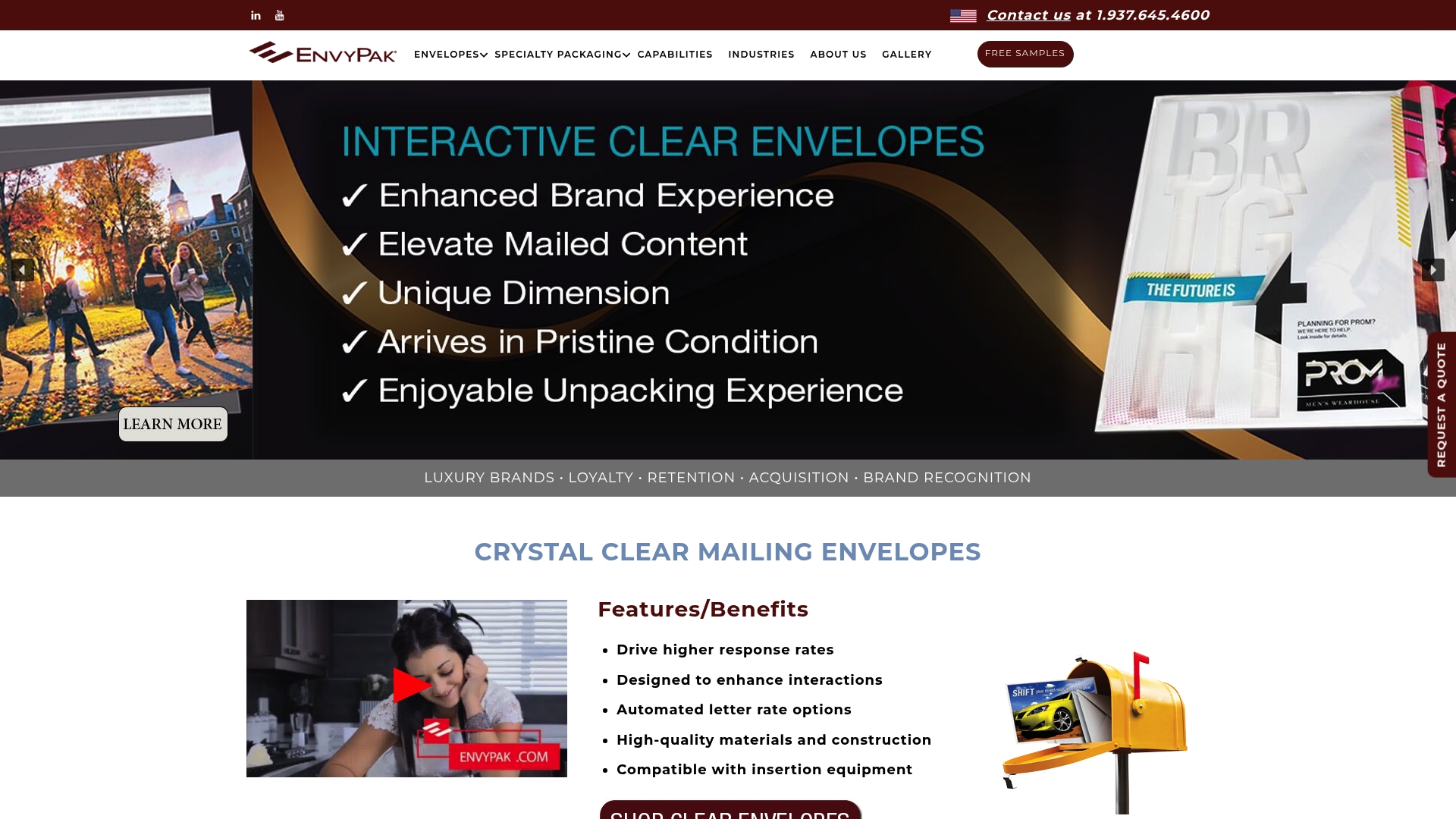
Envypak’s clear poly envelopes let the insert do its job from the moment the mailpiece lands in someone’s hands. The outer envelope becomes part of the presentation, not a barrier to it. Their envelopes are automation compatible, which keeps insertion costs down and production timelines tight. Envypak also offers custom envelopes and mailers sized to fit your specific insert dimensions, so your piece lies flat, inserts cleanly, and meets USPS standards. For campaigns where the right envelope size determines whether your insert fits or folds awkwardly, choosing the right envelope size is the practical starting point.
FAQ
What is a direct mail insert?
A direct mail insert is an additional printed piece, such as a brochure, coupon card, or reply card, placed inside a mailed envelope or package to deliver a targeted message or call to action alongside the primary mailpiece.
How are inserts different from standalone mailers?
Standalone mailers like postcards and self-mailers travel without an envelope and carry no additional pieces. Inserts require an outer envelope or package and are designed to work alongside a letter or other primary piece.
What does a direct mail insert cost to produce?
Insert cards typically cost between $0.03 and $0.12 per unit, depending on paper stock, finish, design complexity, and print volume. Specialty finishes and low print runs push costs toward the higher end of that range.
How do you track the performance of a direct mail insert?
Assign a unique QR code, dedicated URL, or promo code to each insert variant. That tracking mechanism ties responses directly to the insert, enabling ROI measurement and A/B testing across formats, offers, and copy.
What is the most common mistake with direct mail inserts?
The most common mistake is placing multiple calls to action on a single insert. One insert should carry one message and one CTA. Multiple competing messages reduce response rates and make the piece harder to act on.