

Creative Direct Mail Campaign Examples That Drive Results

Creative direct mail campaigns are physical marketing pieces engineered to trigger a response through personalization, tactile design, and precise timing. The best examples of creative direct mail campaigns share three traits: they feel personal, they demand physical interaction, and they arrive at exactly the right moment. Personalizing direct mail with a recipient’s name, life stage, or behavior increases response rates by 135%. That number alone explains why the format is growing, not shrinking, in a digital-first world. Envypak works with marketers who want every piece to get opened, read, and acted on.
What makes a direct mail campaign creative and effective?
Creative direct mail goes beyond a printed postcard. It uses behavioral data, physical texture, and channel integration to make a piece feel like it was made for one specific person.
The core criteria for a high-performing mail piece are:
- Personalization: Use first name, purchase history, or lifecycle stage. Generic copy kills response rates.
- Tactile design: Weight, texture, and opening style all signal value before the recipient reads a word.
- Timing: Mail that arrives during a customer’s decision window outperforms mail sent on a broadcast schedule.
- Digital integration: Pieces that include a QR code or personalized URL connect the physical touchpoint to a measurable digital action.
Lumpy mail, pull-tab mailers, and hand-addressed envelopes each exploit the tactile advantage. A piece that feels different in the hand gets opened first. High-impact mailer designs consistently outperform flat, standard envelopes because they trigger curiosity before the recipient even sees the offer.
Pro Tip: Test one tactile variable at a time, such as envelope weight or a pull-tab, so you can isolate what drives your lift in response rate.
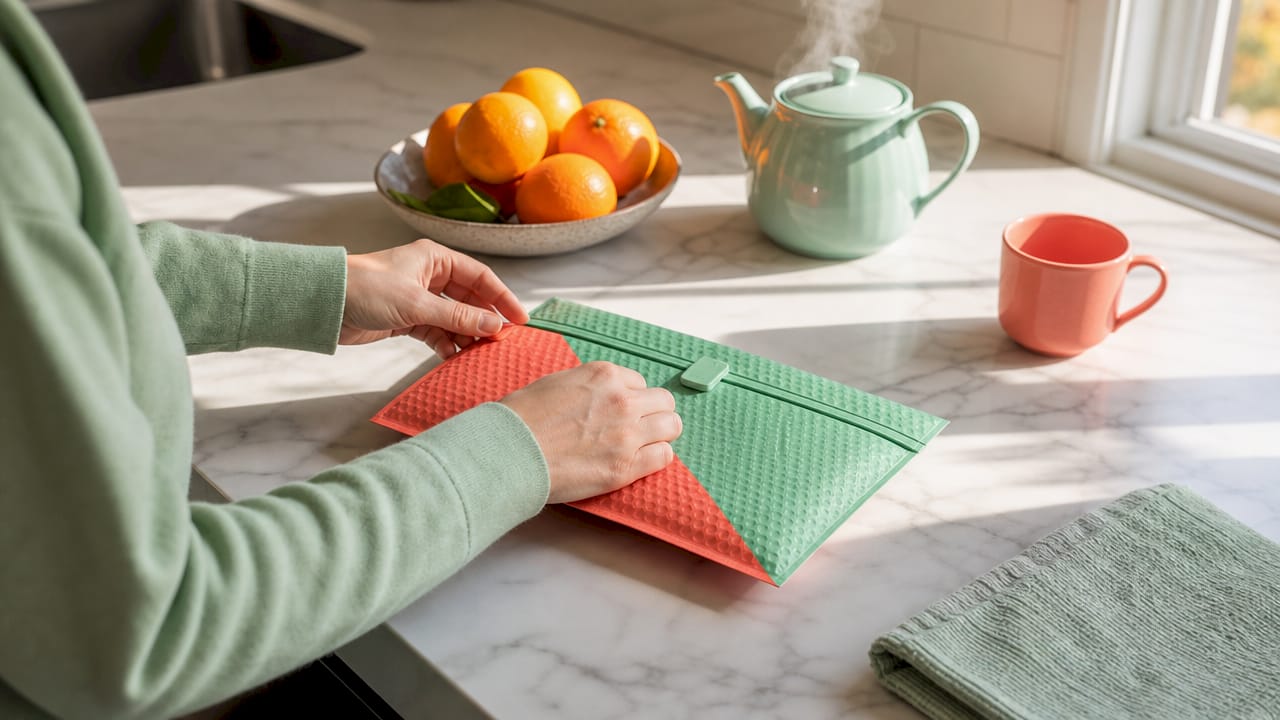
1. Premium hand-addressed invitation mailers
Account-based marketing campaigns that use premium, hand-addressed invitations produce results that digital channels rarely match. One ABM campaign using this format achieved a 58% open rate and a 17% RSVP rate. For context, average email open rates in B2B hover well below 30%. The hand-addressed envelope signals exclusivity. Recipients assume the piece is personal correspondence, not marketing, so the trash reflex never fires.
The production cost is higher than a standard mailer. The conversion rate justifies it, especially for high-value accounts where a single closed deal covers the entire campaign spend.
2. Lumpy mail with a physical object inside
Lumpy mail is any mailer with a three-dimensional object inside. The irregular shape guarantees it lands on a desk rather than in a recycling bin. Lumpy mail packaging drives 100% desk delivery because recipients feel compelled to open anything that does not feel like a flat envelope. USP London used a retro Bluetooth handset as the physical object in a B2B campaign. The piece created an immediate conversation starter and a reason for the sales team to follow up.
The object does not need to be expensive. A branded stress ball, a single-use sample, or a small tool relevant to the recipient’s industry all work. The goal is to create a multi-sensory unboxing moment that makes the brand memorable.
3. Pull-tab mechanical mailers
Pull-tab mailers use a physical sliding mechanism to reveal a second image or message. The recipient pulls a tab and the picture changes. Mechanical pull-tabs create stronger cognitive brand engagement than technology-dependent augmented reality mailers because they require zero setup. No app download. No QR scan. Just a physical action that rewards curiosity instantly.
The interaction creates a memory. Neuroscience research on tactile engagement consistently shows that physical actions tied to a brand message improve recall. Pull-tab mailers work especially well for before-and-after messaging, such as home improvement, weight loss programs, or product upgrades.
4. Personalized URL and QR code mailers
Phygital mail combines a physical piece with a digital destination unique to each recipient. A personalized URL, often called a PURL, takes the recipient to a landing page pre-populated with their name and a relevant offer. QR codes and PURLs integrated with digital channels yield 3X net ROI compared to mail sent without a digital component. That ROI multiplier comes from two sources: higher conversion on the landing page and the ability to track offline-to-online behavior precisely.
Marketers can trigger follow-up emails automatically when a recipient scans the QR code but does not convert. The physical piece starts the conversation. The digital sequence closes it.
Pro Tip: Create a dedicated landing page for each mail campaign rather than sending recipients to your homepage. A matched message between the mailer and the landing page lifts conversion significantly.
5. Seasonal worry-window campaigns
Seasonal direct mail campaigns timed to a customer’s decision moment outperform campaigns sent on a fixed calendar schedule. Timing mid-february to early march for pest control campaigns yields the best response rates because homeowners begin thinking about spring infestations before they start price-comparing. Arriving before the comparison phase builds trust and locks in the relationship.
The principle applies across industries. A tax preparation firm that mails in late january captures clients before anxiety peaks. A landscaping company that mails in early march reaches homeowners before they call three competitors. The goal is to hit the worry window, the period when the problem feels real but the customer has not yet committed to a solution.
Examples of seasonal timing strategies that work:
- B2C holiday campaigns: Mail 3–4 weeks before a major holiday to capture gift buyers before digital ad costs spike.
- B2B fiscal year-end campaigns: B2B seasonal mail peaks at fiscal quarters, so mail 6–8 weeks before a prospect’s fiscal year end to capture unspent budget.
- Lifecycle trigger campaigns: Send a renewal offer 60 days before a subscription or service contract expires.
- Early access campaigns: Mail a “first look” offer to loyal customers before a product launches publicly. Exclusivity drives response.
| Audience | Peak timing | Campaign type |
|---|---|---|
| B2C consumers | 3–4 weeks before major holidays | Gift offers, seasonal promotions |
| B2B decision-makers | 6–8 weeks before fiscal year end | Budget capture, contract renewals |
| Service customers | 8–12 weeks before seasonal demand | Worry-window lead generation |
| Loyalty segment | 60 days before contract expiry | Renewal and upsell offers |
6. Triggered automated mail sequences
Behavior-triggered mail sends a physical piece based on a digital action, such as an abandoned cart, a product page visit, or a lapsed subscription. Data-driven direct mail reduces cancellation rates by 1.73% and produces 3X net ROI when it complements a digital customer journey. The physical piece arrives when the prospect’s intent is highest, which is a timing advantage no broadcast campaign can replicate.
Automation platforms connect CRM data to print-on-demand services. When a trigger fires, the system generates a personalized piece and mails it within 24–48 hours. The result feels spontaneous to the recipient and is entirely systematic for the marketer.
7. Oversized and dimensional postcards
Standard postcards get sorted quickly. Oversized postcards, those exceeding 6 by 11 inches, stand out in a mail stack because they cannot be hidden behind smaller pieces. Size alone increases visibility. Pair an oversized format with a bold single image and one clear call to action, and you have a piece that communicates in under three seconds.
Dimensional postcards add a fold or a pop-up element that creates a small unboxing moment even without an envelope. Oversized mailers get noticed because physical size triggers a different cognitive response than standard mail. They signal importance before the recipient reads anything.
8. Clear envelope mailers that show the offer
A clear envelope removes the guesswork. The recipient sees the design, the offer, or the product image before opening the piece. This format works because it eliminates the first barrier to engagement: the decision to open. Envypak’s crystal clear mailers are built specifically for this purpose. The envelope becomes part of the creative, not just a container for it.
Clear envelopes also signal confidence. Brands that hide their offer behind an opaque envelope create friction. Brands that show it immediately communicate that the offer is worth seeing. For promotional campaigns with strong visual creative, a clear envelope consistently outperforms a standard white envelope.
9. Hyper-targeted B2B multi-touch sequences
B2B campaigns that use physical mail as one step in a multi-touch sequence outperform single-send blasts. Hyper-targeted B2B sequences timed 8–12 weeks before seasonal demand avoid price battles and improve conversion because the brand is already trusted by the time competitors start mailing. The sequence typically runs: email, physical mail, follow-up call, email. The physical piece is the pattern interrupt that makes the sequence memorable.
The targeting criteria matter more than the creative in B2B. A well-timed, plainly designed letter sent to the right 200 contacts outperforms a beautifully designed piece sent to 2,000 wrong ones. Direct mail acquisition in B2B is a precision exercise, not a volume game.
Key takeaways
Creative direct mail campaigns consistently outperform generic mailers when personalization, tactile design, and precise timing work together.
| Point | Details |
|---|---|
| Personalization drives response | Personalizing by name, behavior, or life stage increases response rates by 135%. |
| Tactile formats earn attention | Lumpy mail, pull-tabs, and clear envelopes create physical engagement that digital cannot replicate. |
| Timing beats volume | Hitting the customer’s worry window before competitors arrive is more valuable than a larger send list. |
| Digital integration multiplies ROI | QR codes and PURLs combined with physical mail produce 3X net ROI versus mail alone. |
| B2B requires hyper-targeting | Timed, multi-touch sequences to a small precise list outperform broad B2B blasts every time. |
Why I think most marketers still underestimate physical mail
I have watched marketing teams spend months debating subject line copy for email campaigns while their direct mail program runs on autopilot with a five-year-old template. That is backwards. Email inboxes are saturated. Physical mailboxes are not.
The campaigns I have seen produce the most surprising results are not the ones with the biggest budgets. They are the ones where someone made a deliberate decision about the unboxing experience. The weight of the envelope. Whether the letter was hand-addressed. Whether the piece required the recipient to do something physical to reveal the offer. Those details are not decoration. They are the mechanism.
The nostalgia angle is real, but it is not the whole story. A pull-tab mailer works not because it reminds people of childhood. It works because it creates a moment of agency. The recipient does something, and something happens. That interaction encodes the brand message more deeply than passive reading ever will.
My practical advice: stop treating direct mail as a broadcast channel. Treat it as a conversation starter. Send fewer pieces to better-targeted lists. Time them to the worry window. Give the recipient something to do. Then track every response through a dedicated URL or phone number so you know exactly what worked.
The marketers who combine that discipline with a genuinely well-designed piece, including the right envelope format, are the ones whose campaigns I keep seeing cited as benchmarks.
— James
Envypak’s role in your next direct mail campaign
The physical envelope is the first thing your recipient touches. It sets the expectation for everything inside.
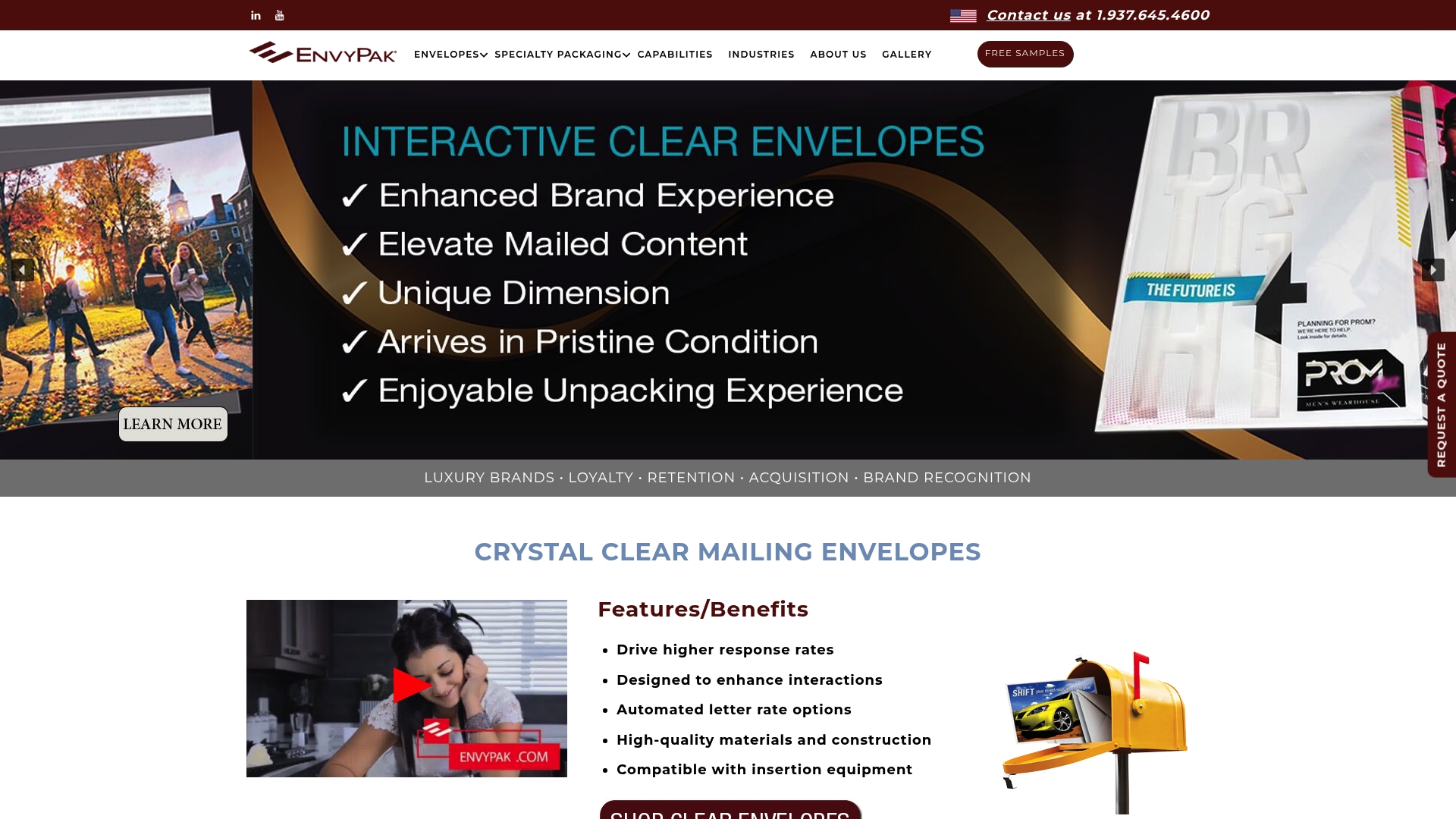
Envypak’s crystal clear mailers let your creative do the work before the envelope is even opened. Recipients see the design, the offer, and the brand immediately. That visibility removes the hesitation that kills response rates. For campaigns where the unboxing experience matters, Envypak also offers custom envelope and mailer options built to match your format, whether you are running a lumpy mail sequence, an oversized postcard drop, or a premium ABM piece. Every product is automation-compatible and made from eco-friendly materials, so your campaign scales without adding waste. See the full range at Envypak’s direct mail result stories to understand what the right packaging does for real campaigns.
FAQ
What are the most effective examples of creative direct mail campaigns?
Hand-addressed premium mailers, lumpy mail with physical objects, and pull-tab mechanical mailers consistently produce the highest open and response rates. Personalizing any format by name or behavior increases response rates by 135%.
How do seasonal direct mail campaigns improve response rates?
Seasonal campaigns timed to a customer’s worry window, the period before they begin comparing competitors, capture attention and trust before price becomes the deciding factor. B2C peaks near major holidays; B2B peaks at fiscal quarter ends.
What is phygital direct mail?
Phygital direct mail combines a physical piece with a digital touchpoint such as a QR code or personalized URL. This integration produces 3X net ROI compared to mail sent without a digital component.
How does clear envelope packaging affect direct mail performance?
Clear envelopes remove the decision barrier by showing the offer before the recipient opens the piece. Envypak’s crystal clear mailers are designed specifically to increase open rates by making the creative visible from the outside.
When should B2B marketers use direct mail over email?
B2B marketers should use physical mail as a pattern interrupt within a multi-touch sequence, especially 8–12 weeks before a prospect’s seasonal demand peak. Hyper-targeted physical mail to a small, precise list outperforms broad email blasts in B2B conversion.